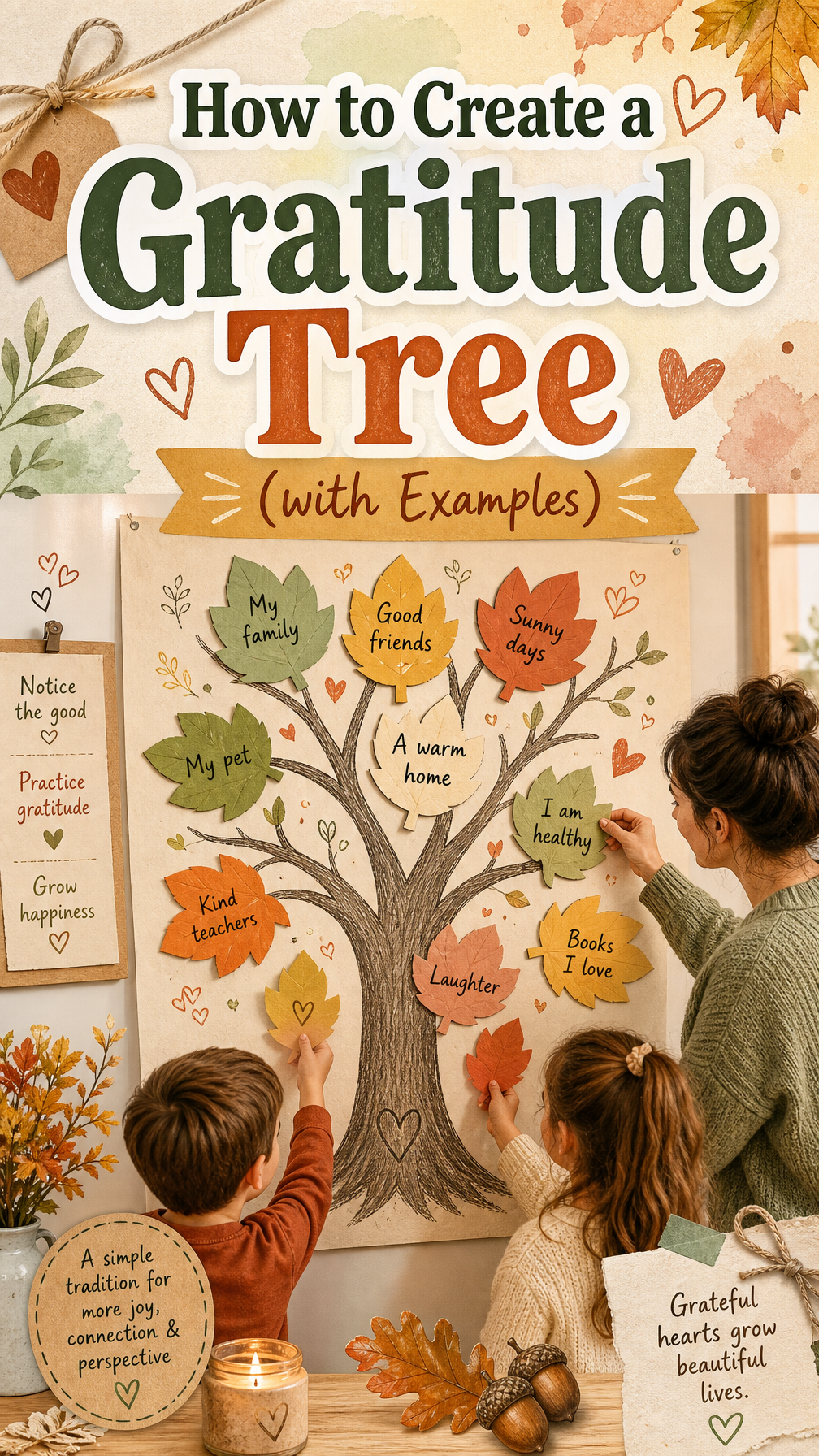

A gratitude tree is a visual craft that helps you and your family focus on the good things in life by writing down what you're thankful for on paper leaves and attaching them to a tree display. This simple activity turns practicing gratitude into something you can see and touch every day. Whether you're looking for a meaningful Thanksgiving tradition or a year-round practice to boost positivity in your home or classroom, creating your own tree of thanks takes just a few basic supplies and about 30 minutes.
Making a gratitude tree involves drawing or crafting a tree with branches, cutting out leaf shapes from colored paper, writing what you're grateful for on each leaf, and attaching them to your display.
The process works for any age group and can be adapted to fit your space and style. You can create a simple paper version for your kitchen wall, build a 3D tabletop display with real branches, or even make a digital gratitude tree with online tools.
The beauty of a thankful tree is that it grows with your family as you add new leaves throughout the weeks and months. Each time someone walks past your gratitude display, they get a reminder of the positive moments and people in their lives. This guide will walk you through everything you need to know to create your own version, with real examples and creative ideas you can start using today.
Key Takeaways
- A gratitude tree is a craft project where you write what you're thankful for on paper leaves and attach them to a tree display
- Creating your thankful tree requires basic supplies like paper, scissors, markers, and about 60 minutes of time
- Regular gratitude practice through a visual tree can improve your mood and strengthen relationships with family and friends
Understanding the Gratitude Tree Concept
A gratitude tree serves as a visual tool to help you practice gratitude by displaying what you're thankful for on branches and leaves. This concept combines creative expression with positive psychology to encourage reflection and strengthen emotional well-being.
What Is a Gratitude Tree?
A gratitude tree is a visual representation of the things, people, and experiences you appreciate in your life. You create a tree structure with branches where each leaf or branch holds a written note of thanks.
The tree can take many forms. You might craft a physical version from paper, cardboard, or real branches. You could also create a digital version using online tools.
Each leaf on your thankful tree carries a specific message. These might include appreciation for family members, positive experiences, or simple daily blessings. The tree grows as you add more leaves over time.
- Gratitude and Thankful Tree Printable with Leaves
- Gratitude Tree
- Gratitude Tree: A Simple Way to Celebrate Thankfulness
- The Simple & Easy Guide to Making Your Gratitude Tree
Origins and Evolution
The thanksgiving tree concept emerged from positive psychology practices that focus on cultivating gratitude. Mental health professionals and educators began using visual gratitude exercises to help people shift their focus toward positive aspects of life.
These trees gained popularity during Thanksgiving celebrations in North America. Families started creating seasonal displays where everyone could add leaves expressing what they were grateful for during the holiday.
The practice has since expanded beyond holidays. Schools, therapists, and workplaces now use gratitude trees year-round. Digital versions have made the concept more accessible, allowing remote teams and separated families to participate together.
The Purpose and Impact
Your tree of thanks serves multiple important functions. It helps you practice gratitude regularly by making thankfulness a visible, ongoing activity rather than an occasional thought.
The activity works to promote positivity in your daily mindset. When you see your growing collection of grateful moments, you train your brain to notice good things more often.
Creating and maintaining a gratitude tree can build resilience during difficult times. Research in positive psychology shows that people who regularly acknowledge what they're thankful for cope better with stress and recover faster from setbacks.
The practice also strengthens relationships. When you share your tree with family, friends, or coworkers, everyone sees what others value and appreciate. This mutual recognition creates stronger bonds and improves communication between people.
Core Benefits of Gratitude Trees
Gratitude trees offer real advantages that go beyond simple crafts. They help you pause and notice good things in your life while strengthening your mental health and relationships with others.
Fostering Mindfulness and Reflection
A gratitude tree activity naturally pulls you into the present moment. When you write down what you're thankful for, you stop rushing through your day and pay attention to specific people, experiences, or moments that matter.
This practice of mindfulness helps you notice small joys you might otherwise miss. You might realize you're grateful for your morning coffee, a kind word from a friend, or the way sunlight comes through your window.
The act of choosing what to write encourages reflection on your daily life. You start looking for things to add to your tree, which shifts your focus toward positive experiences. This regular practice builds a habit of noticing good things as they happen instead of only remembering problems or stress.
Boosting Emotional Well-Being
Research in positive psychology shows that gratitude activities reduce stress and increase happiness. When you regularly engage with your gratitude tree, you create a visual reminder of positive aspects in your life.
This practice helps build resilience during tough times. Looking at your tree full of grateful moments reminds you that good things exist even when you face challenges.
The simple act of writing gratitude notes can lift your mood. Each time you add a leaf or read previous entries, you reinforce positive thoughts. Over weeks and months, this repeated focus on gratitude can genuinely improve your overall sense of contentment and well-being.
Building Stronger Connections
Creating a gratitude tree with family, friends, or coworkers strengthens your bonds. When you share what you appreciate about each other, you promote positivity in your relationships.
Reading others' gratitude notes helps you understand what matters to them. You might discover a coworker values your help more than you realized, or learn what makes your children feel happy and secure.
Gratitude trees in classrooms or workplaces create shared experiences that bring groups together. They encourage people to recognize and appreciate each other's efforts, which builds trust and mutual respect. This collective practice of gratitude creates a more supportive environment where everyone feels valued.
Essential Supplies and Templates
Creating a gratitude tree requires just a few basic materials and the right template to get started. Most supplies are simple items you already have at home, while templates provide the structure to make your project easy and fun.
Understanding Printable Templates
A gratitude tree template gives you a ready-made design that saves time and effort. These templates usually feature a tree with branches where you can attach leaves or notes. You don't need artistic skills to create something beautiful.
Templates come in different styles. Some are simple outlines perfect for coloring. Others include detailed designs ready to use right away. A thankful tree printable can be sized for a wall display or kept smaller for tabletop use.
Many templates include printable leaves as part of the design. These pre-shaped leaves make it easy to cut and write your gratitude notes. You can also find templates with gratitude prompts already printed on them to help inspire what you write.
Best Materials and Tools
You'll need colored paper or cardstock to print your template and create leaves. Construction paper works well too. Cardstock holds up better over time if you plan to keep your tree for weeks or months.
Basic craft supplies include scissors for cutting out leaves and tree shapes. Glue sticks or tape help attach leaves to branches. You'll want markers or pens for writing your gratitude notes clearly.
If you're making a wall-sized thankful tree, consider using poster board as a backing. Push pins or removable adhesive strips let you display your tree without damaging walls. String or twine can create a hanging version instead.
Finding and Using Free Printables
Many websites offer free printable templates you can download instantly. Look for PDF files that print clearly on standard paper sizes. Check that the design matches your needs before downloading.
A free thankful tree printable typically includes both the tree and leaf shapes. Some packs provide multiple design options in one download. You can print as many copies as you need for your family or group.
After downloading, adjust your printer settings for the best results. Use the highest quality setting for crisp lines. Print on the paper type you selected in your supplies. Test print one page first to make sure everything looks right before printing multiple copies.
Step-by-Step Guide: How to Make a Gratitude Tree
Creating your own gratitude tree is simple and requires just a few basic materials. The process involves picking a tree style that fits your space, cutting out leaves for writing gratitude notes, putting everything together, and finding the perfect spot to display your finished craft.
Choosing Your Tree Style
You can make a gratitude tree using several different approaches depending on your time and materials. A paper tree works well for quick projects where you draw a tree trunk and branches on poster board or construction paper. A 3D tree uses real branches placed in a vase or pot filled with sand or rocks for stability.
Wall-mounted trees are perfect for classrooms or offices. You can paint a tree directly on the wall or use brown paper to create a trunk and branches. Some people prefer using printable templates that provide ready-made tree outlines you can color and customize.
For outdoor displays, consider decorating an actual tree in your yard. This works especially well for Thanksgiving gatherings where family members can hang their gratitude notes on real branches.
Making Leaves for Gratitude Notes
Cut leaf shapes from colored paper in fall colors like red, orange, yellow, and brown for a traditional look. Each leaf should be large enough to write a few sentences about what you're thankful for. You can trace around real leaves to create natural shapes or use cookie cutters as templates.
Pre-cut leaves save time when working with large groups. Make sure each person gets markers or pens that show up clearly on the paper color you choose. Providing prompts like “I am grateful for…” or “I appreciate…” helps people get started with their gratitude messages.
Another option is using sticky notes shaped like leaves or standard sticky notes in autumn colors. These stick directly to your tree without needing glue or tape.
Assembling and Decorating the Tree
Start by securing your tree base whether that's taping paper to a wall, anchoring branches in a container, or preparing your outdoor tree. For paper trees, use tape or glue dots on the back of each leaf to attach them to the branches. String or ribbon works well for hanging leaves from 3D branches.
Add decorations to make your tree more festive. Glitter, stickers, or ribbons can enhance the visual appeal. Some families write the year on their tree trunk to mark it as a special memory.
Materials checklist:
- Tree base (paper, branches, or real tree)
- Colored paper for leaves
- Scissors
- Markers or pens
- Tape, glue, or string
- Optional decorations (ribbons, stickers, glitter)
Creative Display Ideas
Place your gratitude tree where everyone will see it daily. The kitchen or dining room table works well for family trees since these are high-traffic areas. Classroom trees should go at student eye level where kids can easily reach to add new leaves.
For workplace gratitude trees, common areas like break rooms or lobbies encourage participation from all team members. Digital versions created online allow remote teams to participate even when working from different locations.
Turn your tree into an ongoing project by adding new leaves throughout November or keeping it up year-round. Some families create a gratitude garland by stringing leaves with ribbon and hanging them across a window or doorway instead of using a traditional tree shape.
Inspiring Examples and Creative Variations
Gratitude trees come in many forms, from family displays that grow throughout the year to classroom projects that bring students together. You can adapt this thankful tree concept to fit any setting, whether you're working with kids at home, leading a group activity, or putting your own creative spin on the traditional format.
Family Gratitude Trees
A family gratitude tree serves as a daily reminder of the good things in your life. You can create one by cutting a tree shape from brown paper and attaching it to your wall or refrigerator. Each family member writes what they're grateful for on colorful paper leaves and adds them to the branches.
Some families make this a year-round tradition rather than just a Thanksgiving craft for kids. They start with bare branches in January and watch their tree fill up as the months pass. Others use real branches placed in a vase, hanging leaf-shaped tags with ribbon.
Creating a gratitude tree with your family works best when everyone participates regularly. Set aside time each week for family members to add new leaves. You might be surprised by what your children notice and appreciate, from simple pleasures like their favorite snacks to meaningful relationships with friends and relatives.
Gratitude Tree Activities for Kids
Kids learn gratitude best through hands-on projects. A gratitude tree activity gives children a concrete way to express their thankful feelings. You can start by having them draw or paint their own trees, then cut out leaf shapes for writing.
Gratitude activities for the classroom include having students decorate leaves with drawings instead of words for younger children. Older kids can write detailed descriptions of why they appreciate specific people or experiences.
Another approach involves collecting real fallen leaves during autumn walks. Children write what they're thankful for on these natural leaves and attach them to a paper tree trunk. This combines outdoor exploration with reflection time.
Classroom and Group Projects
Teachers often use gratitude tree activities to build community in their classrooms. A large collaborative tree displayed on a bulletin board allows every student to contribute leaves throughout November or the entire school year. This creates a visual representation of shared appreciation.
Group gratitude projects work well for scout troops, church groups, and community centers. You can organize relay races where team members shout out things they're grateful for, or set up gratitude scavenger hunts where participants search for items that spark appreciation.
Some educators pair the physical tree with gratitude journals where students write regular entries. This combination reinforces the habit of noticing positive aspects of daily life. Photo booth setups with gratitude props add a fun element that kids especially enjoy.
Unique Twists: Jars, Prompts, and More
If wall space is limited, a gratitude jar offers a compact alternative. Family members write thankful thoughts on small papers and drop them into a decorated jar. Read these notes together during meals or special occasions.
Gratitude prompts help when you're stuck on what to write. Try these specific questions:
- What made you smile today?
- Who helped you this week?
- What skill or ability are you glad you have?
- What place makes you feel peaceful?
Some people create gratitude rocks by decorating smooth stones with uplifting messages. Others make gratitude collages using magazine cutouts of things they appreciate. Digital gratitude trees work for tech-savvy families who want to save and share their thankful thoughts electronically.
You can also adapt the tree concept into different seasonal shapes. Try a gratitude wreath for winter, a flower garden for spring, or a sunshine with rays for summer. The format matters less than the regular practice of recognizing good things in your life.
Tips for Meaningful Gratitude Practice
A gratitude tree works best when it becomes part of your regular routine and grows with your family throughout the year. Simple adjustments can help everyone stay engaged and make practicing gratitude feel natural rather than forced.
Making Gratitude a Habit
Set a specific time each day or week to add new items to your gratitude tree. This could be during Sunday dinner, before bedtime, or first thing in the morning with coffee.
Start small with just one gratitude entry per person each week. This prevents burnout and keeps the activity from feeling like a chore. You can create a simple routine for your gratitude tree by placing it in a high-traffic area where everyone naturally gathers.
Keep supplies nearby in a small basket or container. Include pens, pre-cut leaves or paper, and tape so anyone can quickly add something without searching for materials. The easier you make it, the more likely your family will participate regularly.
Try pairing gratitude practice with an existing habit. Add a leaf right after your weekly game night or when you sit down for weekend breakfast together.
Encouraging Ongoing Participation
Ask open-ended questions to encourage reflection and help people think beyond surface-level responses. Instead of “What are you thankful for?” try “What made you smile this week?” or “Who helped you recently?”
Effective prompts include:
- What challenge helped you grow?
- What small moment brought you joy?
- What comfort or safety do you appreciate?
- Who showed you kindness?
Share your own genuine entries to model vulnerability and depth. When you write about something specific and personal, others feel more comfortable doing the same.
Recognize contributions without judgment. Every gratitude is valid, whether someone appreciates their favorite blanket or uses the activity to build resilience through difficult times.
Let younger children draw pictures or dictate their thoughts if writing feels difficult. Keep participation pressure-free and celebrate whatever they contribute.
Adapting the Activity for Any Season
Your gratitude tree doesn't need to be seasonal. You can create meaningful family activities with thankful trees year-round by changing the visual theme.
Transform your tree through the calendar year. Use cherry blossoms in spring, green leaves in summer, fall colors in autumn, and snowflakes or evergreen branches in winter. This keeps the display fresh and relevant.
Consider these seasonal adaptations:
| Season | Visual Element | Focus Theme |
|---|---|---|
| Spring | Flower petals | New beginnings |
| Summer | Bright leaves | Adventures and fun |
| Fall | Orange/red leaves | Traditional gratitude |
| Winter | Snowflakes | Warmth and comfort |
You can also align your gratitude practice with holidays throughout the year. Create heart-shaped notes for Valentine's Day or star-shaped ones for New Year's resolutions. The key is keeping the core practice of gratitude while refreshing the presentation to maintain interest.
Final Thoughts on Gratitude Trees
A gratitude tree is more than just a craft project. It's a meaningful way to bring people together and help everyone focus on the good things in life.
The beauty of creating a gratitude tree is that there's no single right way to do it. You can make yours as simple or elaborate as you want. Some families create new trees every holiday season, while others keep theirs up all year long.
Here are some key benefits you'll experience:
- Improved mood and reduced stress levels
- Stronger family or classroom bonds
- Better appreciation for everyday moments
- A visual reminder of positivity in your space
You might start with a small paper tree and discover you want to expand it. That's perfectly fine. Many people begin adding leaves weekly or monthly as new grateful moments arise.
A thankful tree works well in almost any setting. Homes, classrooms, offices, and community centers can all benefit from this simple practice. The important part is making it your own.
Don't worry if your tree doesn't look perfect. The value comes from the practice of thinking about and writing down what you're thankful for. Even young children can participate by drawing pictures instead of writing words.
Your gratitude tree will grow and change with you. Some leaves might make you smile months or years later when you read them again. Others might remind you of challenges you've overcome. Each note adds to your family's or group's story of appreciation.