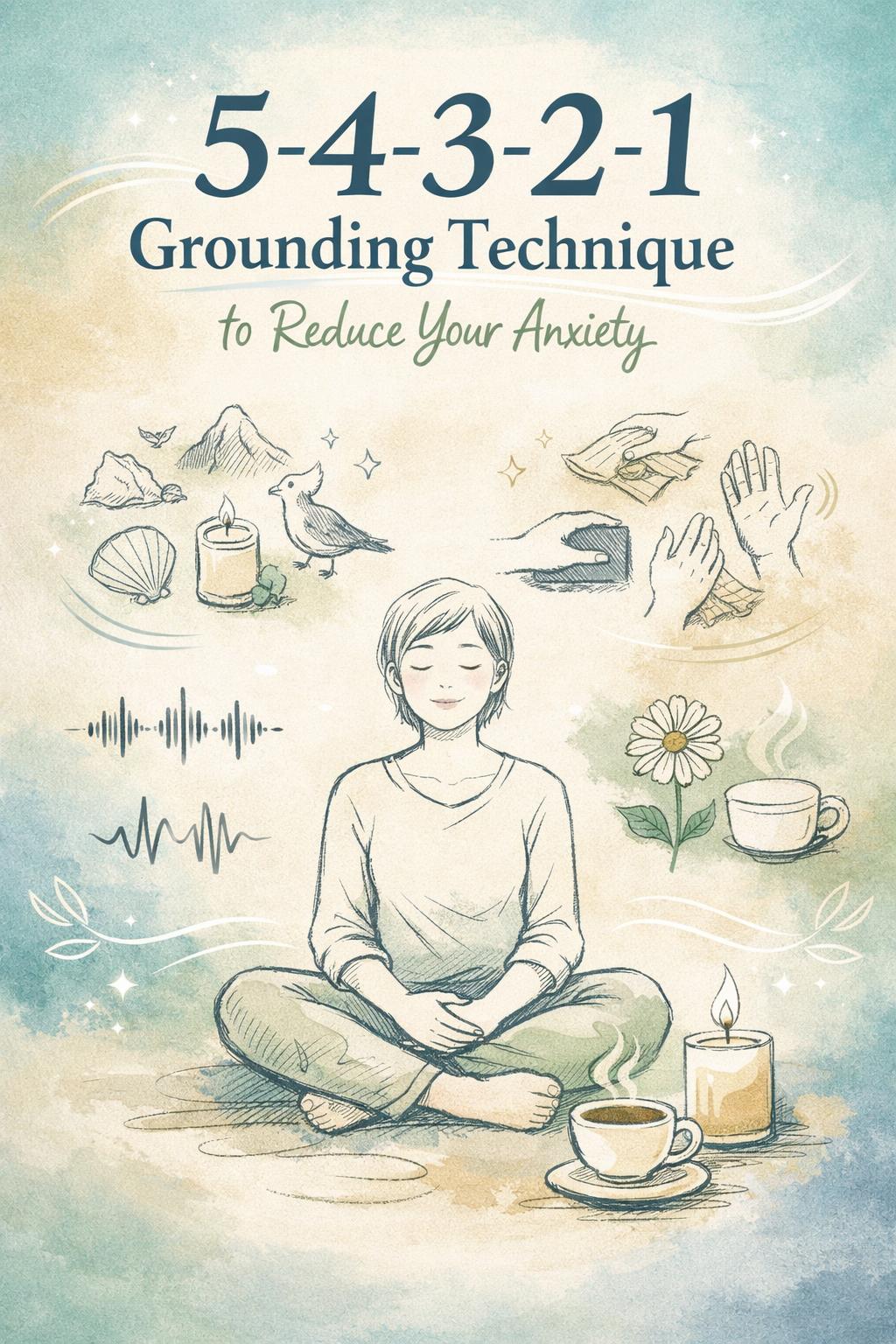

When anxiety starts to take over, your thoughts can spiral out of control. You might feel disconnected from your surroundings or caught in a loop of worry.
The 5-4-3-2-1 grounding technique is a simple method that uses your five senses to bring your attention back to the present moment and interrupt anxious thoughts in about 60 seconds.
This grounding technique works by shifting your focus from what's happening inside your head to what's happening around you right now. You name five things you can see, four you can touch, three you can hear, two you can smell, and one you can taste. The beauty of this approach is that you can use it anywhere without any special tools or preparation.
Learning how to practice this technique properly can give you a reliable way to manage stress and anxiety when they show up. Whether you're dealing with a panic attack or just feeling overwhelmed, this mindfulness-based practice helps your mind slow down and reconnect with your environment.
Key Takeaways
- The 5-4-3-2-1 technique uses your five senses to redirect your attention from anxious thoughts to your immediate surroundings
- You can complete the entire grounding exercise in about one minute by identifying things you see, touch, hear, smell, and taste
- This method helps interrupt anxiety by anchoring you in the present moment rather than staying stuck in worried thoughts
Understanding the 5-4-3-2-1 Grounding Technique
The 5-4-3-2-1 grounding technique uses your five senses to bring you back to the present moment when anxiety takes over. This sensory grounding approach works by shifting your attention away from worried thoughts and onto what you can physically observe around you right now.
What Makes the 5-4-3-2-1 Method Unique
The 5-4-3-2-1 method stands out because it requires no special tools or training. You can practice this mindfulness exercise anywhere—at work, on the bus, or in a crowded store.
Here's what makes it different from other grounding techniques:
- Uses all five senses in a specific countdown pattern
- Takes only a few minutes to complete
- Works in any environment without drawing attention
- Easy to remember because of its numbered structure
The technique asks you to identify 5 things you see, 4 things you touch, 3 things you hear, 2 things you smell, and 1 thing you taste. This structured approach gives your mind a clear task to focus on instead of letting anxious thoughts spiral.
You don't need to sit quietly or close your eyes. You can do this stress management technique while standing in line or sitting at your desk.
Science Behind Sensory Grounding
Your brain can't fully focus on two things at once. When you engage your senses deliberately, you interrupt the cycle of anxious thoughts.
Anxiety often pulls your mind into the future or past. You might worry about what could happen or replay what already did. Sensory grounding brings your attention back to what's happening right now in your body and surroundings.
The technique works with your nervous system. When you name specific things around you, you activate the thinking part of your brain. This helps calm the emotional part that's driving your anxiety response.
Physical engagement matters too. Touching different textures sends signals to your brain that you're safe in this moment. Noticing sounds and smells creates new neural pathways away from anxious thought patterns.
Research shows that grounding exercises can help reduce symptoms of anxiety and depression by shifting your focus to immediate surroundings.
When and Why to Use Grounding Exercises
You can use the 5-4-3-2-1 grounding technique whenever anxiety starts to build. The earlier you catch anxious feelings, the easier they are to manage.
Common situations for grounding include:
- Panic attacks or feeling overwhelmed
- Racing thoughts that won't slow down
- Physical anxiety symptoms like rapid heartbeat
- Flashbacks or dissociative episodes
- Stressful situations at work or home
You don't have to wait until anxiety is severe. Many people practice this method as a daily mindfulness exercise to prevent anxiety from building up.
The technique works best when you practice it regularly, not just during crisis moments. Think of it like a muscle that gets stronger with use.
Some people find it helpful right before stressful events like presentations or difficult conversations. Others use it at night when worried thoughts keep them awake.
Step-by-Step Guide to Practicing the Technique
The 5-4-3-2-1 technique works by guiding you through each of your five senses in a specific order. This sensory grounding approach helps pull your attention away from anxious thoughts and brings you back to what's happening around you right now.
5 Things You Can See
Start your grounding exercise by looking around and naming five things you can see. These can be anything in your environment, whether big or small.
You might notice a blue coffee mug on your desk, a crack in the ceiling, or the way sunlight hits the wall. Try to pick objects you wouldn't normally pay attention to during your day.
What to look for:
- Colors and textures of objects near you
- Patterns on furniture or clothing
- Small details like shadows or reflections
- Items in the distance or close up
Say each item out loud or in your head as you spot it. This helps your brain focus on the present moment instead of worrying about the future or past. The goal is to really see these objects, not just glance at them quickly.
Take a few seconds with each item you identify. Notice specific details like the exact shade of green on a plant leaf or how many books are stacked on a shelf.
4 Things You Can Feel
Next, identify four things you can feel right now through physical touch. This part of the 5-4-3-2-1 grounding method connects you to your body and surroundings.
You might feel the texture of your jeans against your legs, the cool metal of your watch, or your feet pressing into the floor. Pay attention to the temperature of each sensation too.
Physical sensations to notice:
- The chair supporting your back
- Your hair touching your neck or forehead
- The weight of your phone in your hand
- Air moving across your skin
You can also actively touch objects around you. Run your fingers over a smooth desk surface or grip the armrest of your chair. Notice if things feel rough, soft, warm, or cold.
This mindfulness practice helps ground you in your physical body. When anxiety makes you feel disconnected or floaty, focusing on touch brings you back to solid reality.
3 Things You Can Hear
Now tune into three sounds around you. Close your eyes if it helps you focus better on what you're hearing.
You might hear the hum of an air conditioner, birds chirping outside, or distant traffic noise. Even in quiet spaces, you can usually find sounds if you listen carefully.
Sounds to listen for:
- Background noises you usually ignore
- Your own breathing
- Voices or footsteps nearby
- Electronic devices humming
Don't judge the sounds as good or bad. Just notice them as they are. You might hear your stomach gurgling, a clock ticking, or wind rustling through trees.
Try to identify where each sound is coming from. Is it above you, to your left, or far away? This helps activate different parts of your brain and deepens the grounding effect.
Some sounds might be constant while others come and go. Pay attention to both types as you work through this grounding technique for anxiety relief.
2 Things You Can Smell
Finish by identifying two things you can smell. This is often the hardest part because we don't always notice smells around us.
If you can't smell anything obvious, that's okay. You can move to find scents like soap on your hands, your shirt's laundry detergent smell, or coffee in your mug.
Common scents to notice:
- Your own perfume or deodorant
- Food or drink nearby
- Fresh air from outside
- Cleaning products or soap
You might smell the leather of your shoes, mint from gum you chewed earlier, or the mustiness of old books. Even your own skin has a scent if you pay attention.
Take a slow breath in through your nose as you identify each smell. This also helps calm your breathing, which reduces anxiety symptoms. Some people keep a small item with a pleasant scent handy just for this step, like a chapstick or hand lotion.
Bringing It All Together: Completing the Cycle
The final step in the 5-4-3-2-1 grounding technique focuses on taste, bringing you fully into the present moment. Taking time to practice this step mindfully can strengthen your connection to your surroundings and make the entire grounding exercise more effective.
1 Thing You Can Taste
After working through your senses of sight, touch, hearing, and smell, you'll identify 1 thing you can taste. This might be the flavor of coffee still on your tongue, the mint from your toothpaste, or the lingering taste of your last meal.
If you can't identify a taste right away, you have options. You could take a sip of water and notice its clean, neutral flavor. You might reach for a piece of gum or candy nearby.
Some people find it helpful to simply notice the natural taste inside their mouth. Your saliva has a subtle flavor that you can detect when you pay attention. You can also lick your lips or run your tongue across your teeth to notice different sensations.
If nothing is available to taste, using your imagination works too. Think about your favorite food and recall its taste in detail. This mental exercise still helps anchor you in the present moment.
Tips for Deepening the Practice
As you complete the cycle, go slowly through each sensation. Rushing through the steps reduces the calming effects of this mindfulness practice.
Pay attention to the details you notice. Instead of just thinking “I taste coffee,” notice if it's bitter, sweet, or has a smooth texture. This deeper awareness strengthens your grounding techniques and pulls your mind away from anxious thoughts.
Try closing your eyes during the taste step. This can help you focus more fully on the sensation and block out distractions.
Practice without judgment. Don't worry if you find this step harder than the others or if your mind wanders. Simply notice what's happening and gently bring your attention back to the present moment. Some days the practice will feel natural, and other days it might feel challenging.
You can repeat the entire 5-4-3-2-1 grounding sequence as many times as you need until you feel calmer.
How Grounding Interrupts Anxiety and Panic
When anxiety takes over, your body goes into fight-or-flight mode, which makes your thoughts race and your heart pound. The 5-4-3-2-1 grounding technique works by shifting your attention away from anxious thoughts and back to what's actually happening around you right now.
Understanding the Stress Response
Your brain treats anxiety like a real threat, even when there's no actual danger. When you feel anxious, your amygdala sends out alarm signals that trigger physical symptoms like sweating, rapid breathing, and muscle tension.
Grounding techniques help interrupt this cycle by engaging your five senses. This tells your brain to focus on concrete details in your environment instead of worried thoughts. Your nervous system starts to calm down because it receives new information that you're safe.
The 5-4-3-2-1 method gives your mind a specific task to complete. When you search for five things you can see or four things you can touch, your brain can't focus on both the grounding exercise and panic at the same time. This redirect helps break the stress response before it gets worse.
Benefits for Panic Attacks and Intense Anxiety
Panic attacks can make you feel like you're losing control or dying. The 5-4-3-2-1 technique is one of the most recommended tools because it works quickly during these intense moments.
The technique anchors you in the present moment, which is important because panic attacks often involve fears about the future. You might notice your racing thoughts slow down within minutes of starting the exercise.
Key benefits during panic attacks:
- Reduces the intensity of physical symptoms
- Shortens the duration of panic episodes
- Gives you something to focus on besides fear
- Helps you feel more in control
Combining the technique with deep breathing makes it even more effective for stress management.
Reducing Anxiety Through Regular Practice
You don't need to wait for a panic attack to use grounding. Practicing the technique regularly helps reduce your overall anxiety levels over time.
When you use grounding throughout your day, you train your brain to stay present more often. This makes it harder for anxious thoughts to spiral out of control. Many people find that their baseline anxiety drops after a few weeks of daily practice.
You can reduce anxiety by using the technique during low-stress moments too. Try it during your morning coffee or while waiting in line. This builds your skill so you're better prepared when real stress hits.
The more you practice, the faster the technique works. Your brain learns to recognize the pattern and starts calming down as soon as you begin counting things you can see.
Adapting and Enhancing Your Practice
The 5-4-3-2-1 method becomes more effective when you tailor it to your specific needs and combine it with other calming strategies. You can modify the grounding exercise to fit different environments and pair it with techniques like deep breathing to boost its power.
Variations and Modifications for Different Situations
You can adapt the 5-4-3-2-1 method to work in any setting. If you're in a quiet space with limited sensory input, focus more deeply on subtle details. Notice the different shades of color in a single object or the texture variations in your clothing.
When you're in a loud or crowded environment, you might struggle to isolate individual sensations. In these cases, start with whichever sense feels easiest to access. You don't have to follow the exact order.
Try these modifications:
- Quick version: Name 3 things you see, 2 you hear, and 1 you feel when time is tight
- Extended version: Spend 30-60 seconds on each sense for deeper relaxation
- Silent practice: Think through each step mentally when you can't speak out loud
- Movement-based: Walk slowly while doing the grounding technique to add physical awareness
You can also practice the technique in calm moments so it becomes automatic during stressful times.
Combining 5-4-3-2-1 With Other Mindfulness Strategies
Your grounding exercise works even better when you pair it with other stress management tools. Start with deep breathing before you begin the 5-4-3-2-1 sequence. Take three slow breaths, inhaling for four counts and exhaling for six counts.
You can also add positive affirmations between each sensory step. After naming what you see, tell yourself “I am safe right now” or “I can handle this moment.”
Powerful combinations include:
- Box breathing + grounding: Breathe in a square pattern (4-4-4-4) while identifying sensory details
- Body scan + 5-4-3-2-1: Notice tension in your muscles as you work through each sense
- Gratitude practice: Express thanks for one thing in each category you identify
Combining mindfulness-based practices helps calm your nervous system more completely. These layered approaches give your mind multiple pathways back to the present moment.
Common Mistakes and How to Avoid Them
Many people rush through the grounding technique without fully engaging their senses. You might list items quickly without actually observing them. This defeats the purpose.
Avoid these common errors:
- Racing through steps: Slow down and spend at least 10-15 seconds on each item you identify
- Judging your observations: Don't label things as good or bad, just notice them
- Using the same items repeatedly: Challenge yourself to find different sensations each time
- Giving up too soon: The technique might not work instantly, especially when anxiety is high
Another mistake is expecting the 5-4-3-2-1 method to eliminate anxiety completely. It's designed to reduce anxiety and bring you back to the present, not make all stress disappear. Be patient with yourself if you don't feel calm immediately.
Don't criticize yourself if your mind wanders during the exercise. Simply notice the distraction and gently return your focus to your senses. This redirection is actually part of building your mindfulness skills.