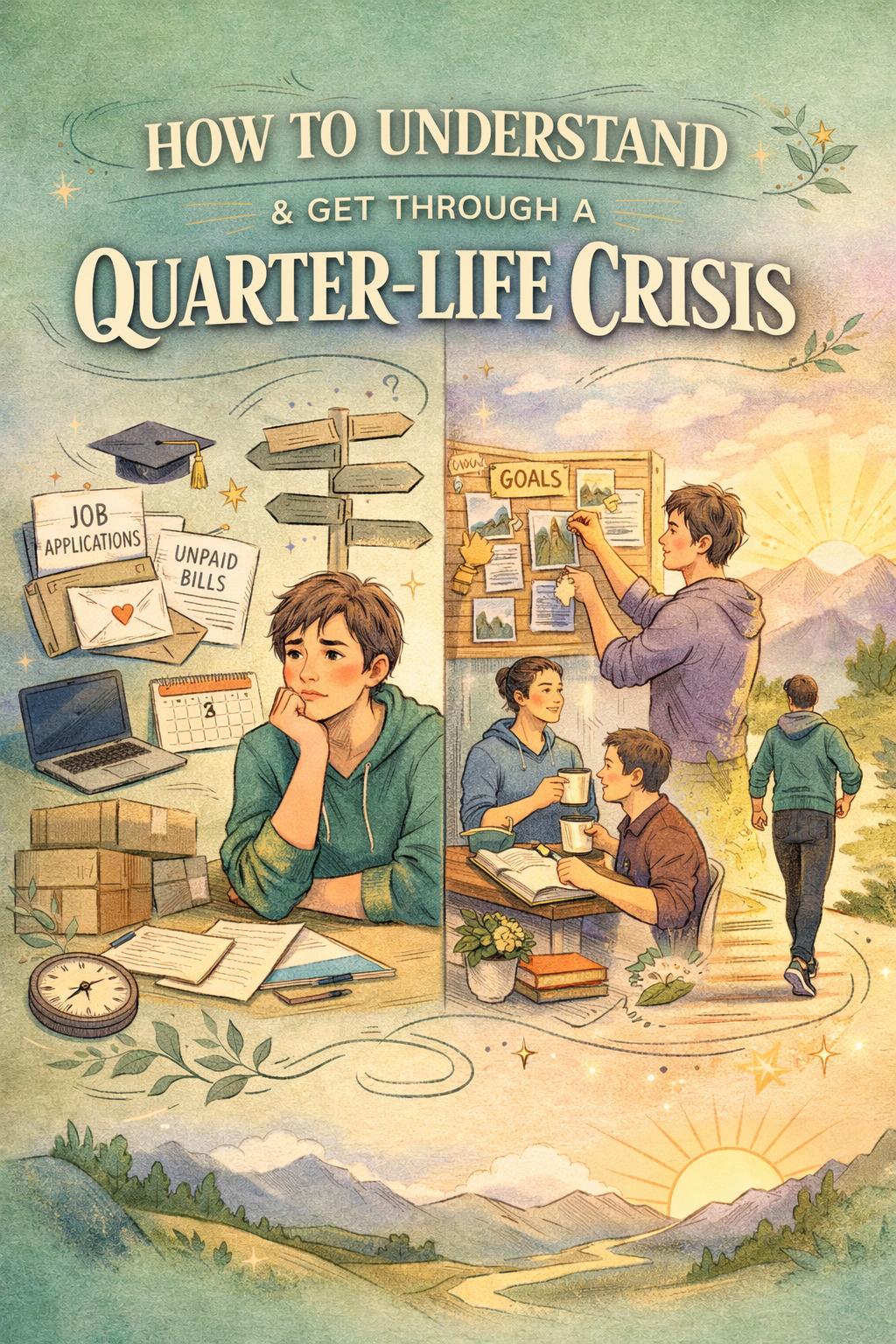

You're in your twenties or early thirties, and suddenly everything feels uncertain. Your career path seems unclear, your relationships feel complicated, and you're not sure who you're supposed to be. A quarter-life crisis is a period of intense uncertainty and self-doubt that many young adults experience as they transition from college life to full adulthood, often triggered by pressure to make major life decisions about career, relationships, and identity.
This period of confusion is more common than you might think. A quarter-life crisis is a normal experience that happens when the shift from childhood to adulthood feels overwhelming. You might feel stuck, anxious about the future, or like everyone else has it figured out except you.
The good news is that understanding what a quarter-life crisis means can help you move through it with less stress. This guide will show you how to recognize what's happening, understand why it feels so hard, and find practical ways to move forward with more confidence.
Key Takeaways
- A quarter-life crisis is a normal part of growing up that involves confusion about career, identity, and life direction
- You can work through this period by identifying what matters to you and taking small, practical steps forward
- Building connections with supportive people and reframing this time as an opportunity for growth helps you navigate the transition
Recognizing the Signs of a Quarter-Life Crisis
A quarter-life crisis shows up through specific feelings and behaviors that affect your daily life. Understanding what triggers these experiences helps you identify when you're going through this challenging time.
Emotional and Behavioral Changes
You might notice that you feel anxious, confused, or overwhelmed about your future more often than usual. These emotions can show up as constant worry about your career path, relationships, or life direction.
Many people going through this period feel stuck or lost. You may question whether your current job fits your goals or wonder if your relationships are right for you.
Common emotional signs include:
- Feeling lonely even when surrounded by people
- Questioning your identity and values
- Worrying that time is running out
- Doubting your past decisions
Your behavior might change too. You could lose interest in activities you once enjoyed or feel restless about your current situation. Some people experience changes in appetite or sleeping difficulties during this time.
It's important to know that if these feelings come with other signs like loss of pleasure or significant mood changes, you should talk to a doctor or mental health professional.
Common Triggers During Early Adulthood
Several life events can start a quarter-life crisis. Graduating from college often triggers these feelings because you face real-world pressures for the first time.
Career stress ranks high as a trigger. You might feel pressure to find the “perfect” job or worry that your current work lacks meaning. Comparing yourself to peers who seem more successful can make these feelings worse.
Major life transitions that can trigger a crisis:
- Starting your first serious job
- Ending or starting significant relationships
- Moving to a new city
- Watching friends reach milestones you haven't achieved
- Facing financial pressures like student loans
Social media makes these triggers stronger. You see carefully chosen highlights from other people's lives, which can make you feel like you're falling behind. The pressure to have everything figured out by a certain age creates stress that doesn't match reality.
Why This Transition Can Feel So Overwhelming
Your brain and body react strongly to major life changes, creating intense emotional responses that can catch you off guard. The combination of external expectations and internal confusion makes your twenties particularly challenging to navigate.
The Pressure of Timelines and Comparison
Social media constantly shows you what everyone else is accomplishing. You see friends getting promotions, buying homes, getting engaged, or traveling the world. This creates a feeling that you're falling behind on some invisible schedule.
The pressure to hit major life milestones as a young adult leaves many people feeling anxious and stuck. You might feel like there's a “right” age to finish school, start a career, or settle down. These timelines often come from family expectations, cultural norms, or what you observe around you.
The reality is that everyone moves at different speeds. Your friend who seems to have everything figured out might be struggling in ways you don't see. Comparing your chapter three to someone else's chapter twenty doesn't give you accurate information.
The transition from college to work life adds another layer of pressure. You're suddenly expected to know what you want and make decisions that feel permanent.
Uncertainty Around Identity and Direction
You spent years following a clear path through school. Now you face open-ended questions about who you are and what you want. This shift from structure to freedom can feel paralyzing rather than exciting.
Your identity might have been tied to being a student, athlete, or part of a specific group. When those roles end, you have to figure out who you are without them. This process of rediscovery takes time and isn't always comfortable.
Career choices add to the confusion. You might question whether your degree matches your interests or if the job you have aligns with your values. These transitions bring uncertainty and stress even when they look exciting from the outside.
Your priorities might shift as you learn more about yourself. What seemed important at twenty-two might feel meaningless at twenty-seven, leaving you to start over with new goals.
Taking Stock of What You Want
Figuring out what you truly want requires sorting through your own values and taking an honest look at different parts of your life. This process helps you separate what matters to you from what others expect.
Separating Personal Values From Outside Expectations
Your parents, friends, and society all have ideas about what your life should look like. These outside voices can make it hard to hear your own thoughts.
Start by writing down what success means to you without thinking about anyone else's opinion. Does it mean helping people, creating things, having flexibility, or earning a certain income? There are no wrong answers.
Next, list the expectations you feel from others. Maybe your family wants you to follow a certain career path or your friends pressure you to live a particular lifestyle. Engaging in self-reflection helps you move forward and find meaning in your life.
Compare both lists side by side. Notice where they match up and where they clash. The gaps between what you want and what others expect often cause the most stress during a quarter-life crisis.
Give yourself permission to want different things than you thought you would. Your values can change as you grow and learn more about yourself.
Assessing Work, Relationships, and Lifestyle
Look at the main areas of your life to see what fits and what doesn't. This step helps you spot specific changes you might want to make.
Work assessment questions:
- Do you feel challenged or bored most days?
- Does your job match your values?
- Are you learning skills you care about?
- Does your schedule work for your life?
Relationship assessment questions:
- Do your friendships give you energy or drain you?
- Are you staying in relationships out of habit?
- Do the people around you support your growth?
Lifestyle assessment questions:
- Does where you live make you happy?
- Can you afford your current way of living?
- Do your daily habits align with your goals?
After you work through these questions, you can start making new commitments and goals that reflect what you actually want. Focus on one area at a time instead of trying to change everything at once.
Creating a Practical Path Forward
Moving past uncertainty requires concrete steps that match your current reality. Focus on goals you can adjust as you learn and build confidence in areas that support your independence.
Setting Small, Flexible Goals
Breaking down big dreams into smaller steps makes progress feel possible. Instead of “find my dream career,” try “talk to three people working in fields that interest me this month.” These actionable steps help you make shifts in your life without feeling overwhelmed.
Write down one or two goals for the next 30 days. Make them specific enough to know when you've completed them but flexible enough to adjust if circumstances change.
Examples of flexible goals:
- Try one new activity related to a potential interest
- Update your resume or online profile
- Read two articles about a field you're curious about
- Schedule coffee with someone whose path interests you
Track what you complete each week. This creates visible proof of movement forward, even when bigger questions remain unanswered. You don't need to have everything figured out to start making progress.
Building Financial and Career Confidence
Money worries and job uncertainty often fuel quarter-life stress. Start by understanding your actual financial situation rather than avoiding it.
List your monthly income and expenses. Knowing the real numbers helps you make informed decisions about jobs, living situations, and next steps. Even small amounts saved each month create breathing room for future choices.
For career confidence, focus on experiments to find fit rather than committing to one permanent path. Try freelance projects, informational interviews, or short-term roles in different areas. Each experience teaches you what works and what doesn't.
Build skills that transfer across jobs. Communication, problem-solving, and basic technical abilities serve you regardless of where your path leads. You're not locked into any single direction at this stage of life.
Strengthening Your Support System
Having people you can talk to and knowing when to get professional help makes a real difference when you're going through a quarter-life crisis. These connections give you practical advice and emotional support during uncertain times.
Talking Openly With Trusted People
You don't have to go through a quarter-life crisis alone. Reaching out to friends, family members, or mentors you trust can help you process your feelings and gain new perspectives on your situation.
Start by identifying a few people in your life who listen without judgment. These might be close friends who know you well, family members who support you, or mentors who have been through similar experiences. Schedule regular check-ins with them, whether that's coffee meetings, phone calls, or video chats.
Be honest about what you're experiencing. Share your doubts about your career path, your worries about relationships, or your questions about your identity. Most people appreciate when you open up because it often helps them feel comfortable sharing their own struggles too.
Building a support system means surrounding yourself with people who care about your well-being. You can also join groups or communities of people your age who are facing similar challenges, which reminds you that your feelings are normal.
Knowing When Professional Help Can Help
Sometimes talking to friends and family isn't enough. Professional support isn't a sign of weakness but rather a practical tool for managing difficult times.
Consider seeking therapy if you're experiencing chronic anxiety, trouble sleeping, or feelings of hopelessness that last for weeks. A therapist who specializes in young adult development can provide evidence-based strategies tailored to your specific situation.
Quarter-life crises typically resolve within 10-14 months with the right support. Professional therapists help you work through uncertainty about your identity, career, and relationships using proven methods.
You might benefit from therapy if you:
- Feel stuck and can't make decisions
- Notice your daily functioning is affected
- Experience intense worry that interferes with work or relationships
- Feel isolated even when around others
Many therapists now offer virtual sessions, making it easier to fit appointments into your schedule. Your mental health deserves the same attention you give to your physical health.
Finding Growth in the In-Between
The uncertainty of a quarter-life crisis can actually become a useful time to try new things and learn what fits your life. This period asks you to give yourself permission to explore without pressure and to treat yourself with kindness when things feel unclear.
Making Room for Experimentation
Think of your twenties as a time to test different paths rather than commit to one forever. You can try micro-experiments like taking on a side project, volunteering in a new field, or learning a skill you've been curious about.
These small tests help you figure out what energizes you and what drains you. You don't need to quit your job or make huge changes right away. Instead, you can explore through low-risk activities that give you real information about yourself.
Ways to experiment safely:
- Take a weekend workshop in something completely different
- Interview people who work in fields you find interesting
- Start a hobby that has nothing to do with your career
- Try living in a new neighborhood or city for a short time
Each experiment teaches you something about your values and preferences. You'll start to notice patterns in what makes you feel alive and what leaves you feeling empty.
Practicing Patience and Self-Compassion
A quarter-life crisis is a normal part of young adult development, not a sign that something is wrong with you. Most people in their twenties feel confused about their direction at some point.
Being hard on yourself for not having everything figured out only makes the uncertainty more painful. You can speak to yourself the way you'd talk to a close friend going through the same thing.
Progress doesn't happen on a straight line. Some weeks you'll feel clear and motivated, while other weeks you'll feel lost again. Both experiences are part of the process.
Give yourself time to work through this phase without rushing to force answers. The clarity you're looking for often comes gradually as you gather more experiences and self-knowledge.
Final Thoughts About Getting Through a Quarter-Life Crisis
A quarter-life crisis is a normal experience that many people go through during their twenties. You're not alone in feeling confused or uncertain about your future.
Remember that this period of doubt and questioning doesn't last forever. Most people move through these feelings and come out stronger on the other side.
Key things to keep in mind:
- Your timeline doesn't need to match anyone else's
- It's okay to change direction or try new paths
- Small steps forward still count as progress
- Asking for help is a sign of strength, not weakness
If you're experiencing symptoms like changes in mood, sleep problems, or loss of pleasure, consider talking to a mental health professional. These could be signs of depression that go beyond a typical quarter-life crisis.
Working through a quarter-life crisis takes time and patience with yourself. Focus on personal development and making small commitments that align with your values.
You have the power to shape your own definition of success. What matters to your friends, family, or social media might not be what matters to you. That's perfectly fine.
Give yourself permission to explore, make mistakes, and learn as you go. Your twenties are meant for figuring things out, not having everything already solved.