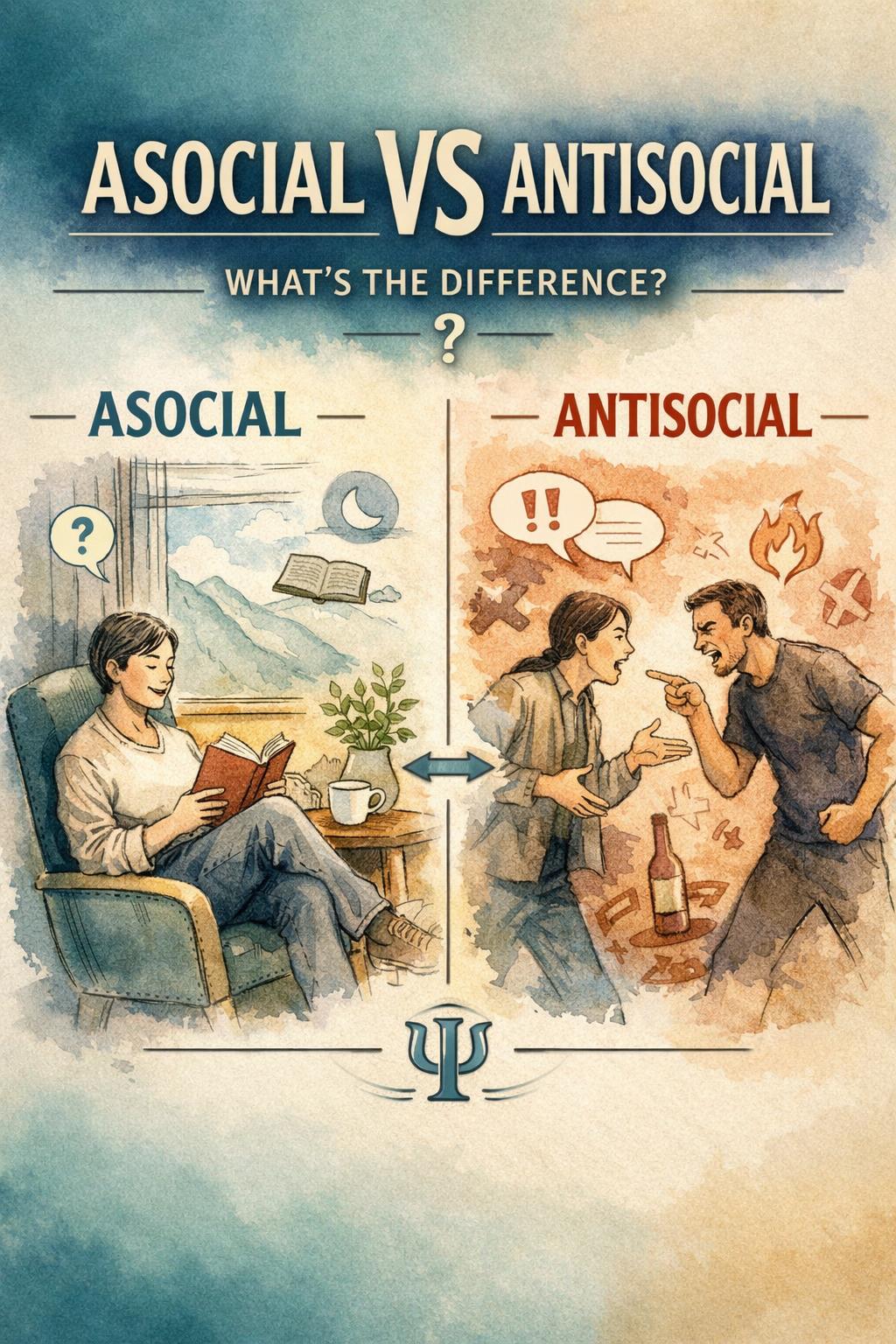

Many people use the words asocial and antisocial as if they mean the same thing, but they describe very different behaviors. You might call yourself antisocial when you want to stay home instead of going to a party, but that's not quite right. Understanding the real difference matters because mixing up these terms can lead to confusion about serious mental health conditions.
Asocial people simply prefer spending time alone and avoid social situations, while antisocial behavior involves harming others and breaking social rules without caring about the consequences. When someone is asocial, they're not trying to hurt anyone. They just feel more comfortable with limited social contact. Antisocial behavior is linked to antisocial personality disorder and often includes intentional harm to others.
The confusion between these two terms affects how we talk about personality traits and mental health. If you've ever wondered why your preference for quiet nights at home doesn't mean you have a personality disorder, you're asking the right question. Learning the core differences between asocial and antisocial behavior helps you better understand yourself and the people around you.
Key Takeaways
- Asocial behavior means preferring solitude while antisocial behavior involves disregarding others' rights and causing harm
- Being asocial is a personality preference and not a mental health disorder, unlike antisocial personality disorder
- Understanding the difference helps you recognize when someone needs support versus when they simply enjoy alone time
Defining Asocial and Antisocial Behaviors
People often mix up these two terms, but they describe very different patterns of behavior. Asocial behavior centers on preferring solitude, while antisocial behavior involves actions that harm others or break social rules.
Asocial Traits and Characteristics
Asocial people simply prefer spending time alone rather than with others. They don't dislike people or want to hurt anyone. They just feel more comfortable and energized when they're by themselves.
Asocial behavior refers to a preference for feeling secluded from others and is not a personality disorder. You might notice asocial individuals choosing solo activities like reading, hiking alone, or working independently. They don't seek out social gatherings and may turn down invitations to parties or group events.
These individuals can maintain relationships when needed. They simply limit their social interactions by choice. They might have a small circle of close friends rather than many acquaintances.
Common asocial traits include:
- Preferring solitary activities
- Feeling drained after social events
- Choosing to eat lunch alone
- Declining social invitations without guilt
- Enjoying hobbies that don't require groups
Antisocial Traits and Characteristics
Antisocial behavior is much more serious than asocial behavior. Antisocial behaviors involve intentional harm to others and a disregard for societal expectations.
People with antisocial tendencies often break rules, lie, manipulate others, and show no remorse for their actions. They may violate the rights of others without feeling guilty. This behavior can range from minor rule-breaking to serious criminal activity.
Antisocial personality disorder (ASPD) is a diagnosed mental health condition. People with ASPD typically show a pattern of disrespecting others and ignoring social norms.
Antisocial characteristics include:
- Lying or deceiving others for personal gain
- Acting impulsively without considering consequences
- Showing aggression or violence toward others
- Ignoring safety of self or others
- Lacking remorse after hurting someone
- Breaking laws repeatedly
Key Differences in Social Interaction Patterns
The core differences between asocial and antisocial behavior lie in intent and impact on others. Asocial individuals withdraw from social situations but don't harm anyone. Antisocial individuals actively engage in behaviors that damage relationships and hurt people.
Asocial people can function well in society. They follow rules, respect others, and maintain appropriate boundaries. When they do interact socially, they're typically polite and considerate.
Antisocial people struggle with respecting boundaries and rules. They may charm others initially but use relationships for personal benefit. Their actions often leave a trail of damaged relationships and hurt feelings.
| Aspect | Asocial | Antisocial |
|---|---|---|
| Motivation | Prefers solitude | Disregards others' rights |
| Social skills | Can interact appropriately when needed | Manipulates or harms others |
| Rule-following | Respects laws and norms | Breaks rules without remorse |
| Impact on others | Minimal to none | Often harmful |
| Intent | Personal preference | Deliberate disregard |
Psychological Perspectives
Mental health professionals view asocial and antisocial patterns through different diagnostic lenses, with antisocial behavior linked to specific personality disorders while asocial traits often reflect normal personality variations.
Diagnostic Criteria and Classifications
Antisocial behavior connects directly to Antisocial Personality Disorder (ASPD) in the DSM-5. You'll find this diagnosis requires a pattern of violating others' rights, starting before age 15. The criteria include repeated lying, impulsive actions, aggression, disregard for safety, irresponsibility, and lack of remorse.
ASPD affects about 1-4% of the population. Mental health experts need to see at least three specific behaviors over time to make this diagnosis.
Asocial behavior is not a personality disorder. It doesn't appear in diagnostic manuals as a mental health condition. Your preference for alone time or limited social contact falls within normal personality variation. Some people with social anxiety disorder or autism spectrum disorder may show asocial traits, but these are separate conditions with their own diagnostic criteria.
Common Causes and Contributing Factors
Antisocial behavior stems from genetic, environmental, and psychological factors. Your genetics can play a role, especially if you have family members with ASPD or substance abuse issues. Childhood trauma, abuse, or neglect increases risk significantly. Brain differences in areas controlling emotions and decision-making also contribute.
Asocial behavior comes from different sources. You might have an introverted personality that naturally prefers solitude. Past negative social experiences can make you cautious about interactions. Social anxiety makes socializing feel uncomfortable or stressful. Some people simply find more satisfaction in solo activities than group settings, which is perfectly normal.
Impact on Daily Life and Relationships
Both asocial and antisocial tendencies shape your everyday experiences differently. Your relationships, work performance, and social connections face distinct challenges depending on which pattern describes you.
Effects on Friendships and Family Dynamics
If you're asocial, your friendships tend to be few but meaningful. You prefer spending time alone rather than at social gatherings, which can sometimes hurt your relationships with family members who don't understand your need for solitude.
Your loved ones might feel rejected or think you don't care about them. However, you're not trying to harm anyone. You simply feel more comfortable on your own.
Antisocial behavior creates much different problems in relationships. You might lie to friends, manipulate family members, or break their trust repeatedly. Your actions can harm others and violate social norms, making it hard for people to maintain relationships with you.
Family members often feel hurt, betrayed, or exhausted from dealing with the conflict you create. Your friendships rarely last long because people get tired of being mistreated.
Challenges in Educational and Workplace Settings
Asocial students often struggle with group projects and class participation. You might avoid study groups or social events, but you still complete your assignments and follow the rules. At work, you prefer independent tasks and might turn down team lunches or office parties.
Your performance doesn't usually suffer as long as you can work alone. You meet deadlines and respect workplace policies.
Antisocial patterns create serious problems at school and work. You might skip classes, cheat on tests, or ignore important rules. In the workplace, you could steal from coworkers, harass others, or repeatedly show up late without caring about the consequences.
These behaviors often lead to suspension, expulsion, firing, or legal trouble. Your disregard for rules and other people's rights makes it hard to stay in educational programs or keep jobs long-term.
Common Misconceptions
People often mix up asocial and antisocial behaviors in everyday conversations, leading to unfair judgments about those who prefer solitude. Movies and TV shows frequently use these terms incorrectly, which creates lasting confusion about what they actually mean.
Confusing Terms in Popular Culture
When someone says they're being “antisocial” at a party, they usually mean they want to be alone. This is actually asocial behavior, not antisocial. Popular culture often confuses these two terms, using “antisocial” as a casual way to describe anyone who avoids social gatherings.
Movies and TV shows make this worse by portraying loners as dangerous or troubled. In reality, asocial simply refers to a preference for feeling or being secluded from others and is not a personality disorder.
The key difference is intent. Asocial people just prefer less social interaction. Antisocial behavior involves actively harming others or breaking social rules without care.
Stigma and Stereotyping
People who enjoy spending time alone often face unfair assumptions about their mental health or character. Your friends might worry that something is wrong if you decline invitations, when you simply recharge better through quiet activities.
Understanding the difference between antisocial and asocial behaviors helps dispel misconceptions that hurt people who naturally prefer solitude. Asocial individuals aren't cold, unfriendly, or struggling with mental health issues just because they limit social contact.
The real harm comes when people assume that preferring alone time means you lack empathy or respect for others. This stereotype can make you feel pressured to socialize even when it drains your energy, leading to unnecessary stress and anxiety.
Support and Coping Strategies
Getting help from a therapist or support group can make a big difference for both asocial and antisocial behaviors. Learning new social skills and understanding your comfort levels takes practice and patience.
When to Seek Professional Help
You should talk to a mental health professional if your social preferences are making you feel lonely or unhappy. Signs that you need help include feeling anxious about normal social situations, avoiding work or school because of social fears, or having trouble keeping relationships with family and friends.
Therapy and support groups can help people manage asocial behaviors by building confidence in social settings. If you have antisocial behaviors, like breaking rules or ignoring others' feelings, professional help is even more important. A therapist can work with you on understanding how your actions affect other people.
People with antisocial personality disorder often need long-term treatment. This might include cognitive behavioral therapy or group therapy sessions.
Building Healthy Social Habits
Start small by setting goals that feel doable for you. You might begin with short conversations at the store or sending a text to an old friend.
Practice social skills in low-pressure situations first. Join a club or group based on something you already enjoy, like books or hiking. This makes talking to others easier because you share common interests.
Try these specific steps:
- Schedule regular check-ins with one or two people you trust
- Set limits on alone time if you're avoiding people too much
- Learn to recognize when you're isolating yourself out of fear versus actual preference
- Practice active listening by asking questions and showing interest in what others say
Remember that building social connections doesn't mean you have to be around people all the time. Finding the right balance for your needs is what matters most.
Final Thoughts About Asocial and Antisocial Behaviors
Understanding the difference between asocial and antisocial behaviors helps you avoid common misunderstandings. These two terms describe very different patterns of behavior.
Asocial behavior means you prefer spending time alone or in small groups. You're not trying to harm anyone. You simply feel more comfortable with limited social interaction.
Antisocial behavior involves disregarding other people's rights and feelings. This behavior is associated with antisocial personality disorder and often includes intentional harm to others.
Here's a quick comparison:
| Asocial | Antisocial |
|---|---|
| Prefers solitude | Violates others' rights |
| Not harmful to others | May harm others intentionally |
| Personal preference | Associated with ASPD |
| Respects social rules | Disregards social rules |
If you prefer being alone, that doesn't mean you have a disorder. Asocial behavior is simply a preference for less social interaction and isn't considered a mental health condition.
However, if you or someone you know shows signs of antisocial behavior like repeatedly violating others' rights or showing no remorse for harmful actions, professional help may be needed. A mental health professional can provide proper evaluation and support.
Remember that both behaviors exist on a spectrum. Your social preferences don't define your worth or character. What matters is how you treat others and whether your behaviors cause harm.