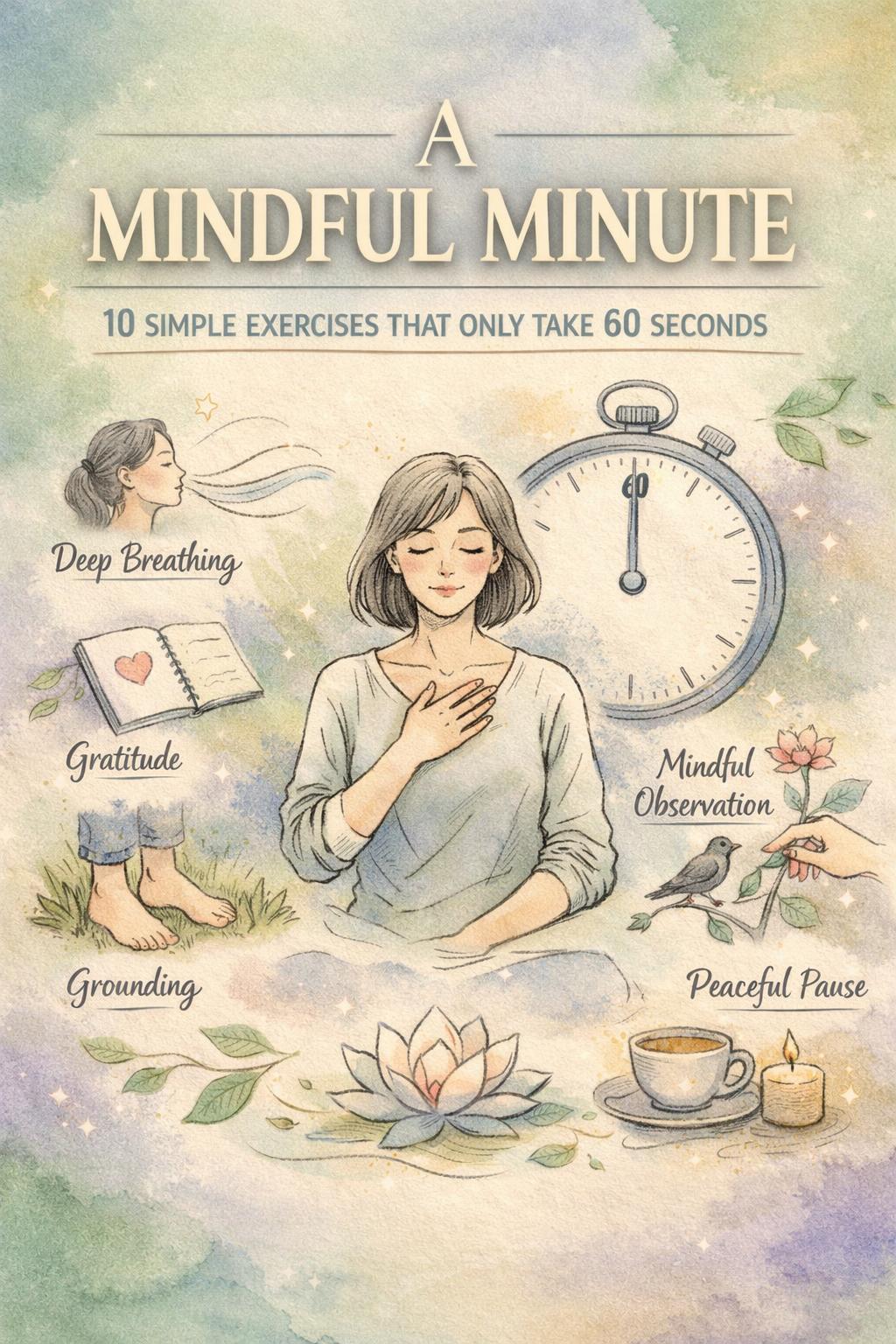

Many people think they don't have time for mindfulness. Between work deadlines, family responsibilities, and daily tasks, finding even a few minutes to slow down can feel impossible.
The good news is that mindfulness exercises can be effective in just 60 seconds or less. You don't need a quiet room, special equipment, or a meditation app to practice being present. A mindful minute is simply a quick pause that helps you center yourself and return to the present moment.
This article shares ten simple exercises you can do anywhere. Each one takes a minute or less and can help reduce stress and improve focus throughout your day.
1) Three-Part Box Breathing (4-4-4)
Box breathing is one of the easiest ways to calm down when you feel stressed or anxious. You might know it as the 4-4-4-4 breathing technique, and it takes just 60 seconds to help you feel more centered.
The pattern is simple. You breathe in for 4 seconds, hold for 4 seconds, breathe out for 4 seconds, and hold empty for 4 seconds.
This technique calms your nervous system and helps you refocus when your mind feels scattered. Navy SEALs use this method to stay calm under pressure, which shows how effective it can be.
Start by finding a comfortable position, either sitting or standing. Place one hand on your chest and one on your belly if that helps you focus on your breath.
Breathe in slowly through your nose while counting to four in your head. Let your belly expand as the air fills your lungs. Hold that breath for another count of four, keeping your body relaxed.
Now breathe out through your mouth for four seconds, releasing all the air from your lungs. Hold your breath again at the bottom for four more seconds before starting the next round.
The four equal counts form the sides of a box, which is where the name comes from. You can repeat this cycle for just one minute to feel the calming effects.
Your body responds to this breathing pattern by slowing your heart rate and reducing stress hormones. It works quickly because you're telling your nervous system that everything is okay.
You can use box breathing anytime you need a quick reset. Try it before a meeting, during a stressful moment, or when you're having trouble focusing on a task.
2) 5-4-3-2-1 Grounding (senses scan)
When your mind feels scattered or anxiety starts to build, the 5-4-3-2-1 grounding technique can bring you back to the present moment in about a minute. This simple exercise uses your five senses to shift your focus away from worried thoughts.
The method works by asking you to notice specific things around you. You start by looking for five things you can see, then four things you can touch, three things you can hear, two things you can smell, and one thing you can taste.
Begin by naming five things in your view. These can be anything from a book on your desk to a crack in the ceiling. Just say them out loud or in your head.
Next, notice four things you can physically feel. Your feet on the floor, your back against a chair, the texture of your clothes, or the temperature of the air all count.
Then listen for three sounds. You might hear traffic outside, a clock ticking, or your own breathing. Any sound works.
Now identify two things you can smell. If you can't smell anything right away, you can move to find a scent or just notice the absence of smell.
Finally, focus on one thing you can taste. This might be leftover coffee, mint from gum, or just the taste in your mouth.
This technique helps calm anxiety by redirecting your brain from stress to what's actually happening around you. Your senses anchor you to the here and now instead of letting your thoughts spiral.
You can use this exercise anywhere without anyone noticing. It works at your desk, in a waiting room, on public transportation, or before a big meeting. The beauty is that you don't need any special tools or quiet space.
When you engage your senses, you give your nervous system something real to focus on. This shifts your brain activity from worrying about threats to processing what's actually in front of you right now.
3) Single Conscious Breath with Belly Count
This exercise helps you focus on just one breath at a time. You place your hand on your belly and count as you breathe in and out.
Start by putting one hand on your stomach. Take a slow breath in through your nose and count to four as your belly rises. Your hand should move outward as air fills your lungs.
Now breathe out slowly through your mouth for a count of four. Feel your belly fall back down under your hand. This simple counting practice anchors your awareness to the present moment.
The belly placement is important because it shows you're breathing deeply. Shallow breathing happens in your chest, but deep breathing moves your diaphragm and makes your stomach expand.
You can do this quick mindfulness exercise anywhere you need a moment of calm. Try it before a meeting, after a stressful phone call, or when you feel your mind racing. The physical sensation of your hand on your belly gives you something concrete to focus on.
If counting to four feels too long or too short, adjust the count to what feels comfortable. Some people prefer three counts while others like five. The goal is to make your exhale about the same length as your inhale.
This technique works well because it combines three elements. You have the physical touch of your hand, the counting to occupy your mind, and the deep breathing to calm your body. All three working together create a powerful reset in just 60 seconds.
4) Brief Body-Scan from head to toes
A body scan meditation helps you notice what's happening in your body right now. You move your attention through different parts of your body, one area at a time.
Start by taking a deep breath and bringing your attention to the top of your head. Notice any sensations there without trying to change them.
Slowly move your focus down to your face and jaw. Are you holding tension in these areas? Just notice what you feel.
Next, shift your attention to your neck and shoulders. These spots often carry stress throughout the day.
Continue moving attention through the various regions of the body, working your way down through your chest, arms, and hands. You're not trying to fix anything or make sensations go away.
Move to your stomach and lower back. Some people notice their breathing more clearly in this area.
Finish by bringing awareness to your hips, legs, and feet. Notice how your feet feel against the floor or in your shoes.
This simple mindfulness practice takes about a minute when done quickly. You can do it while sitting at your desk, standing in line, or lying down. The goal is to check in with your body and become more aware of physical sensations without judgment.
5) Mindful Hand Rub (notice texture & warmth)
Your hands are always with you, making them perfect for a quick mindfulness break. This simple hand exercise takes just 10 seconds to complete.
Start by rubbing your palms together quickly. You'll feel warmth building between your hands within seconds.
Now slow down your movements. Notice how your palms feel against each other. Pay attention to the texture of your skin and any ridges or lines you can feel.
Move to your fingers next. Rub the tips of your fingers together and notice the different sensations. Your fingertips are more sensitive than your palms, so you might pick up more detail.
Focus on the temperature of your hands. Are they warm from the rubbing motion? Do you feel heat concentrated in certain spots?
You can also try rubbing in circular motions across the back of one hand with your other palm. Notice if the back of your hand feels different from your palm. Some areas might feel smoother or rougher.
This exercise works well when you're sitting at your desk or waiting in line. You don't need any special equipment or privacy. Just bring your awareness to the physical sensations in your hands for 60 seconds, and you've completed a mindful moment.
6) One-Minute Gratitude List (3 items)
You can boost your mood and shift your mindset in just 60 seconds by making a quick gratitude list. The goal is simple: think of three specific things you feel thankful for right now.
These don't need to be big or life-changing items. Your list might include a warm cup of coffee, a kind text from a friend, or the fact that you have a comfortable place to sleep tonight.
The key is to be specific rather than general. Instead of “my family,” you might say “my sister calling to check on me yesterday.” This helps your brain focus on real moments and experiences.
You can do this one-minute gratitude practice anytime during your day. Some people find it helpful to do it first thing in the morning when they wake up. Others prefer to do it before bed or during a break at work.
If you want to remember what you're grateful for, you can write your three items down in a journal or notes app. But you can also just think through them mentally if that works better for you.
The practice works because micro-moments of gratitude can rewire your brain toward noticing more positive things. When you regularly look for things to appreciate, you train yourself to spot the good in your daily life.
You'll find that coming up with three items becomes easier the more you practice. Your brain starts to naturally notice grateful moments throughout the day.
7) Focused Listening to Ambient Sound
You can turn the sounds around you into a quick mindfulness practice. This exercise uses whatever noise is already present in your environment.
Start by sitting or standing wherever you are right now. You don't need to find a quiet space or change anything about your surroundings.
Close your eyes if that feels comfortable. Otherwise, just soften your gaze toward the floor.
Notice the sounds happening around you without judging them as good or bad. You might hear traffic, voices, a fan humming, or birds chirping.
Try to listen to ordinary sounds without trying to control the environment. Just let the sounds come and go naturally.
When your mind wanders to thoughts about the sounds, gently bring your attention back to simply hearing them. You're not trying to identify every noise or figure out where it comes from.
The goal isn't to create silence or feel relaxed. You're simply practicing awareness of sound in this moment.
This sound awareness meditation works well when focusing on your breath feels too difficult or uncomfortable. It gives your mind something external to notice.
You can practice this 1 minute mindfulness exercise between tasks, before meetings, or whenever you need a quick mental reset. Your ears are always available to help bring you back to the present moment.
8) Mini Loving-Kindness Phrase: “May I be well”
You can practice compassion for yourself in just 60 seconds with a loving-kindness phrase. This simple meditation technique uses short, kind statements directed at yourself.
Find a comfortable spot and take a deep breath. Close your eyes if that feels right to you.
Silently repeat the phrase “May I be well” several times. You can also add related phrases like “May I be happy” or “May I be at peace.”
Loving-kindness meditation uses the silent repetition of compassionate phrases as a way to focus your attention. The practice helps you build feelings of warmth and care toward yourself.
Some people like to use a longer set of phrases. Traditional versions include statements like “May I be filled with loving-kindness” and “May I be safe from inner and outer dangers.”
You don't need to force any particular feeling. Just say the words gently to yourself and notice what happens. Your mind might wander, and that's perfectly normal.
This quick practice works well when you're feeling stressed or being hard on yourself. Even just 10 seconds of repeating phrases like “May I be well, may I be happy” can help shift your mindset.
The beauty of this exercise is that you can do it anywhere. Try it while waiting in line, sitting at your desk, or lying in bed before sleep.
9) Sip-and-Savor Mindful Drinking
You can turn any beverage into a moment of calm with this simple practice. Whether you're drinking water, coffee, or tea, taking 60 seconds to focus fully on the experience helps you reconnect with the present moment.
Start by holding your cup or glass in your hands. Notice the temperature against your skin and the weight of the container.
Before you take a sip, look at your drink. Pay attention to the color and any steam or bubbles you see.
Now bring the cup to your lips slowly. Notice how your arm moves and how the rim feels against your mouth.
Take a small sip and hold it in your mouth for a moment. Focus on the temperature, texture, and taste of what you're drinking. Notice any flavors that stand out.
As you swallow, pay attention to the sensation of the liquid moving down your throat. Feel it traveling to your stomach.
Take another sip and repeat the process. You can practice this mindful drinking exercise with any drink throughout your day.
This practice works especially well during busy days when you need a quick reset. It helps reduce stress and brings your attention back to your body. You're not adding anything new to your schedule since you already drink beverages throughout the day.
Try this exercise the next time you feel overwhelmed or distracted. This physical micro-meditation doubles as a stress reliever while you hydrate or enjoy your favorite drink.
10) Micro-Walking: 60-Second Heel-to-Toe Steps
You can turn any short walk into a mindfulness practice by focusing on each step. This works whether you're walking to your car, heading to the bathroom, or moving between rooms at home.
Start by standing still for a moment and noticing how your feet feel against the ground. Then begin walking very slowly, paying attention to the sensation of lifting one foot off the floor.
As you step forward, notice your heel touching down first. Feel the weight roll from your heel through the middle of your foot to your toes. Then lift your back foot and repeat the process.
You don't need to walk in a special place or for a long distance. Just 60 seconds of walking with awareness can help you feel more grounded and present.
Focus on the physical sensations in your feet and legs. Notice the muscles working, the pressure changes, and the contact points with the floor. If your mind wanders to other thoughts, gently bring your attention back to the feeling of each step.
This exercise works especially well when you're feeling rushed or scattered. The deliberate pace and focused attention help calm your nervous system. You can practice it anytime you need to walk somewhere, making it one of the easiest ways to add mindfulness to your daily routine.
How One-Minute Mindfulness Supports Daily Well-Being
Quick mindfulness practices can lower your stress hormones and help you stay emotionally steady throughout your day. These 60-second exercises fit into the small gaps in your schedule without requiring special equipment or quiet spaces.
Reducing Stress in Busy Moments
One minute mindfulness exercises work as tiny reset buttons during your busiest hours. When you pause for just 60 seconds to focus on your breath or body, you interrupt the stress response before it builds up.
Your body produces cortisol when you feel overwhelmed or rushed. A mindfulness minute can measurably lower cortisol and calm the part of your brain that triggers worry. This happens even in just one minute of focused attention.
You can use these quick practices at natural breaks in your day. Try them before meetings start, after you finish reading emails, or while you wait in line. The key is choosing moments when you transition from one task to another.
You don't need a meditation app or a quiet room to make this work. Simply pick one thing to focus on, like your breathing or the feeling of your feet on the floor, and notice when your mind wanders away.
Promoting Emotional Balance Instantly
Short mindfulness practices help you notice your feelings without getting swept away by them. When you take 60 seconds to check in with yourself, you create space between what happens and how you react.
Beginning the practice of mindfulness with one-minute exercises makes the habit easier to start and maintain. You build the skill of noticing emotions as they come up instead of letting them control your choices.
Your emotional responses often happen automatically. A quick mindful pause lets you see what you're feeling and decide how to respond. This doesn't mean pushing feelings away or pretending they don't exist.
These brief practices help you recognize patterns in your moods. You might notice that certain times of day feel harder or that specific situations trigger stress. This awareness helps you prepare better and take care of yourself before things feel overwhelming.
Tips for Incorporating Mindfulness Breaks Into Your Routine
Success with mindfulness comes down to making it fit naturally into your day and pushing through the initial resistance that stops most people from building the habit.
Choosing the Right Time and Place
You don't need a quiet room or special cushion to practice micro-mindfulness exercises. The best time for your mindful minute is when you'll actually do it.
Link your practice to something you already do every day. Try taking three deep breaths right after you sit down at your desk each morning. You could also do a body scan while waiting for your computer to start up or practice mindful breathing while your coffee brews.
Common trigger moments include:
- Before meals
- During your commute (as a passenger)
- After using the bathroom
- While waiting in line
- Between meetings or tasks
Pick spots where you feel comfortable closing your eyes or pausing for a moment. Your car, a bathroom stall, or even your desk works fine. You don't need silence or perfect conditions.
Overcoming Common Obstacles
The biggest challenge is remembering to pause when your day gets busy. Set phone reminders at key times or put sticky notes where you'll see them. Many people find that starting with just 10 seconds feels less overwhelming than a full minute.
Your mind will wander during these exercises. That's normal and not a sign you're doing it wrong. Simply notice when it happens and bring your attention back to your breath or body.
If you skip a day, just start again the next day. Missing one practice session doesn't erase your progress. Some people worry they look strange pausing during their day, but most mindfulness exercises look like regular breaks to anyone watching.
Final Thoughts About Mindfulness Exercises
You don't need hours of free time to build a mindfulness practice. Even 60 seconds between tasks can help you feel more grounded and present.
The key is making these exercises part of your daily routine. You can practice while waiting for your coffee to brew, standing in line, or sitting at a red light.
Simple ways to remember your practice:
- Set reminders on your phone
- Link exercises to existing habits like washing your hands
- Keep a note on your desk or mirror
- Start with just one exercise you like
You won't always feel an immediate difference, and that's okay. Some days your mind will wander more than others. The practice is about noticing when that happens and gently bringing your attention back.
What matters most:
- Consistency over perfection
- Short practices done regularly beat long ones done rarely
- Any moment is a good time to start
You're building a skill that gets easier with repetition. Each time you pause to notice your breath or your surroundings, you're training your brain to be more present. These micro-meditations that reset your mind add up over time.
Your mindfulness practice belongs to you. Pick the exercises that feel natural and skip the ones that don't. There's no wrong way to spend a mindful minute.