

Life can feel noisy, overwhelming, and complicated—but sometimes, the simplest reminders are the ones that hit the hardest. A few honest words at the right moment can shift your perspective, calm your mind, or give you the little push you need to keep going. That’s why short positive messages can be so powerful: they cut through the mental clutter and remind us what truly matters.
In this collection, you’ll find 18 thoughtful messages about growth, mindset, stress, healing, and self-awareness. These aren’t overly polished motivational quotes—they’re real, reflective reminders meant to help you pause, think differently, and reconnect with yourself. Whether you’re feeling stuck, overthinking everything, or just needing a moment of clarity, these words are designed to meet you where you are.
Take your time reading through them, reflect on the ones that resonate most, and don’t be afraid to revisit them when life starts feeling heavy again. Sometimes one small shift in perspective is enough to change the direction of your entire day.
1. Not every thought deserves your attention. Let some of them pass.
How many of your thoughts actually deserve your attention?
Not every idea that pops into your mind is wise, helpful, or even true. Some are just noise — old fears replaying, self-doubt whispering, overthinking running wild. But we treat every thought like it’s urgent, like it demands analysis, reaction, or emotion. It doesn’t.
You don’t have to chase every thought down the rabbit hole. You can notice it… and let it pass. Just because your mind says something doesn’t mean you have to carry it. Peace often begins the moment you decide not to engage with everything that enters your head.
2. You’re not stuck. You’re just scared to move.
What if you’re not actually stuck — just afraid of what happens if you move?
Sometimes we tell ourselves we’re trapped, blocked, out of options. But when we look closer, there’s usually a choice sitting right there… it just feels uncomfortable. Moving forward might mean risking failure, rejection, uncertainty, or even outgrowing the life you’ve gotten used to. Staying still feels safer — even if it’s slowly draining you.
Being scared doesn’t mean you’re stuck. It means you’re standing at the edge of change. And courage isn’t the absence of fear — it’s deciding to move anyway.
3. Most of your stress is coming from things that haven’t happened.
How much of what you’re stressing about has actually happened?
Most of the anxiety you feel isn’t coming from reality — it’s coming from imagination. The “what ifs.” The worst-case scenarios. The conversations that haven’t happened yet. The problems your mind is trying to solve before they even exist. Your body reacts as if it’s real, but it’s just a story playing on repeat.
Pause. Breathe. Come back to what’s actually in front of you. Right now, in this moment, you’re likely okay. Don’t let tomorrow’s maybe steal today’s peace.
4. Growth feels uncomfortable. That doesn’t mean it’s wrong.
When was the last time growth felt comfortable?
Growth stretches you. It asks you to let go of what’s familiar, question what you’ve always known, and step into spaces where you don’t feel fully confident yet. That discomfort isn’t a red flag — it’s often a sign that you’re expanding. Muscles ache when they’re being strengthened. Minds feel uncertain when they’re learning something new.
Don’t confuse unfamiliar with wrong. Just because it feels awkward, challenging, or even scary doesn’t mean you’re on the wrong path. Sometimes discomfort is simply proof that you’re becoming more than you were yesterday.
5. You don’t need more time. You need less distraction.
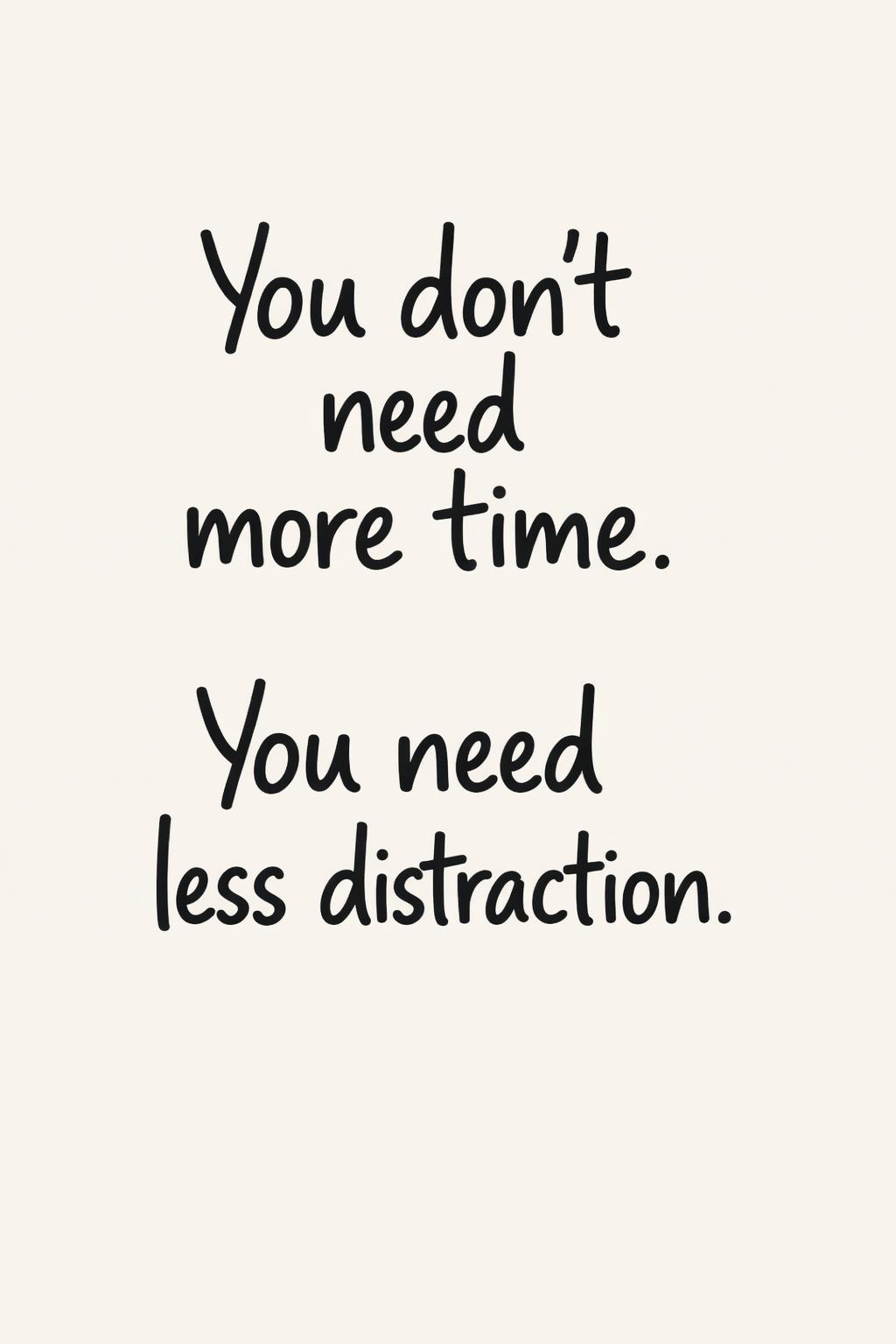
If you had zero distractions, what would you already have finished?
We love to say we don’t have enough time — but the truth is, we leak it. Into endless scrolling. Into notifications. Into conversations that don’t move us forward. Into busywork that feels productive but isn’t. It’s not always a time problem. It’s an attention problem.
Focus is a superpower in a distracted world. Protect it. Create space for deep work, quiet thinking, and intentional action. You don’t need more hours in the day — you need fewer things competing for them.
6. Stop arguing with reality. Work with it.
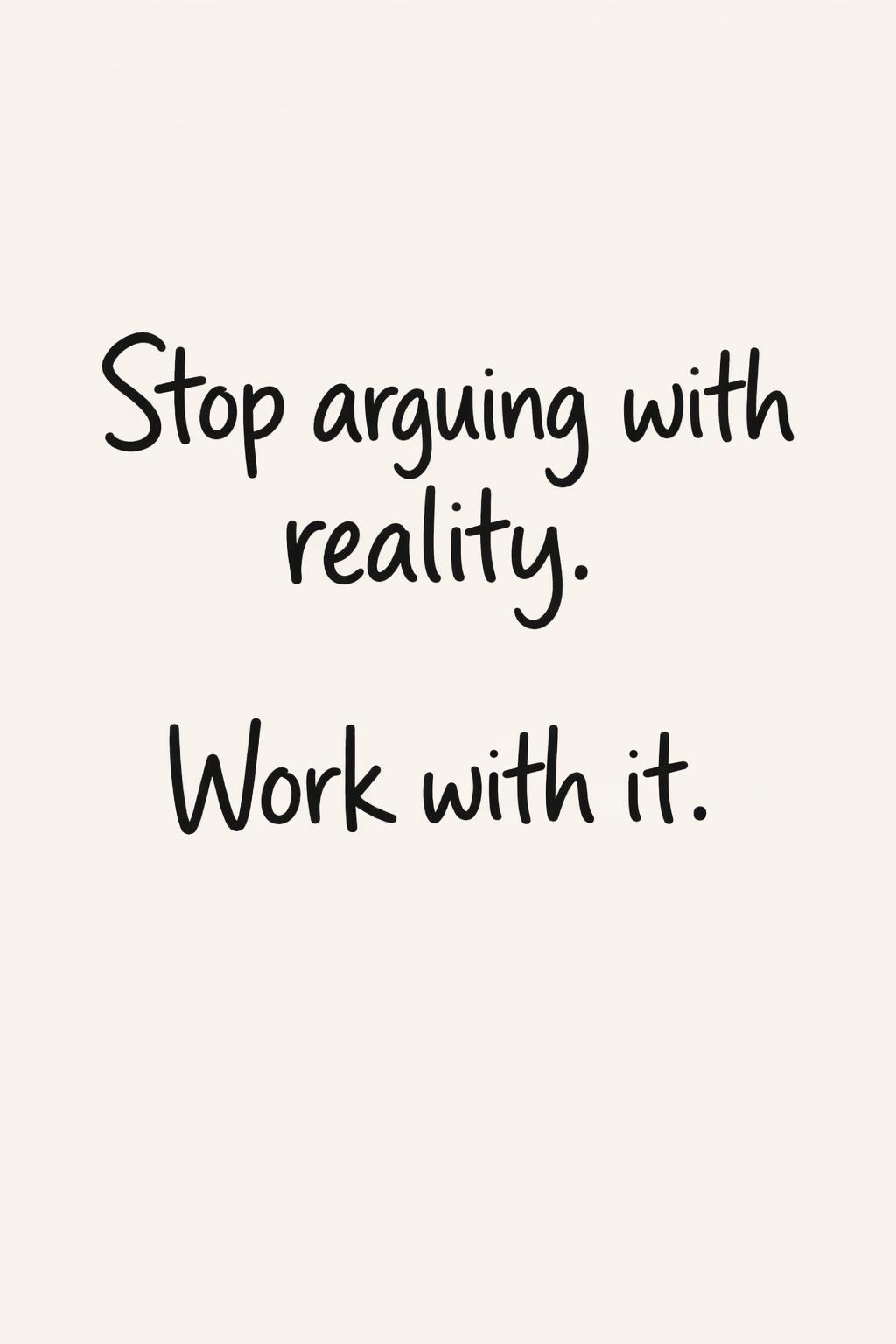
How much energy are you wasting fighting what already is?
Reality doesn’t change just because we dislike it. The traffic is still there. The mistake still happened. The situation is what it is. Arguing with it in your head only drains you and keeps you stuck in resistance. Acceptance isn’t giving up — it’s getting clear.
When you stop fighting reality, you free up energy to respond to it. You can adapt. Adjust. Strategize. Move forward. Power comes from working with what’s in front of you, not wishing it were something else.
7. Your mind is loud. That doesn’t make it right.
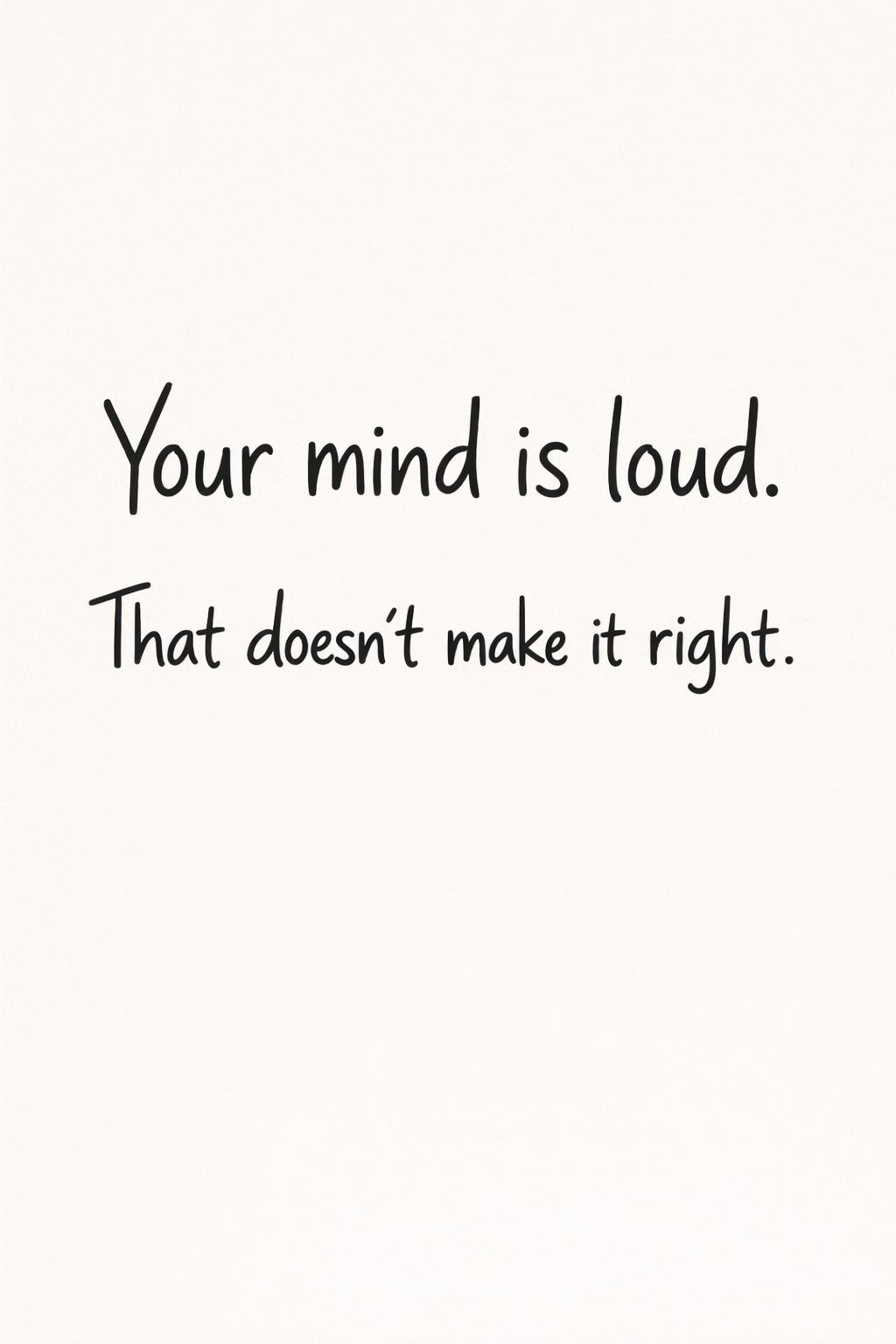
Is your mind telling the truth — or just speaking the loudest?
Your thoughts can be intense, dramatic, and convincing. They replay old mistakes, predict worst‑case scenarios, and amplify insecurities like they’re facts. But volume doesn’t equal validity. Just because a thought is loud doesn’t mean it’s accurate.
You are allowed to question your own mind. Pause. Challenge the narrative. Look for evidence. Not every fear deserves belief, and not every inner critic deserves a microphone. Sometimes peace begins when you stop assuming that the loudest voice in your head is the right one.
8. You can’t heal in the same mindset that hurt you.
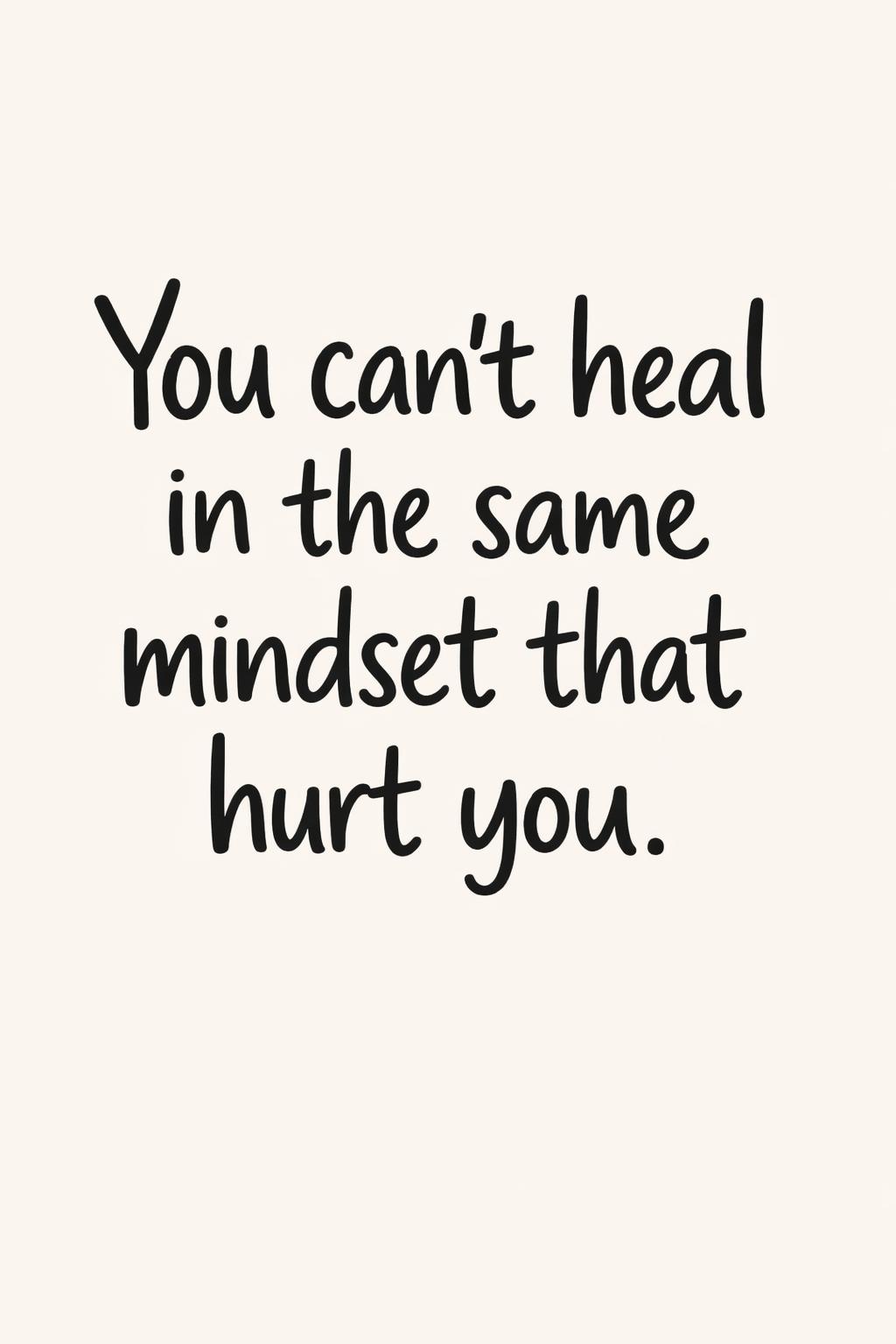
Are you trying to heal while still thinking the same way that broke you?
Growth isn’t just about time passing — it’s about perspective shifting. If you’re still replaying the same narratives, blaming yourself in the same ways, or tolerating the same patterns, the wound may stay open. Healing requires a new lens. One that’s kinder. Wiser. More honest.
You can’t build a healthier life with the same beliefs that damaged the last one. At some point, you have to challenge the story you’ve been telling yourself. Real healing begins when your mindset changes — not just your circumstances.
9. The problem isn’t always the situation. Sometimes it’s your interpretation.
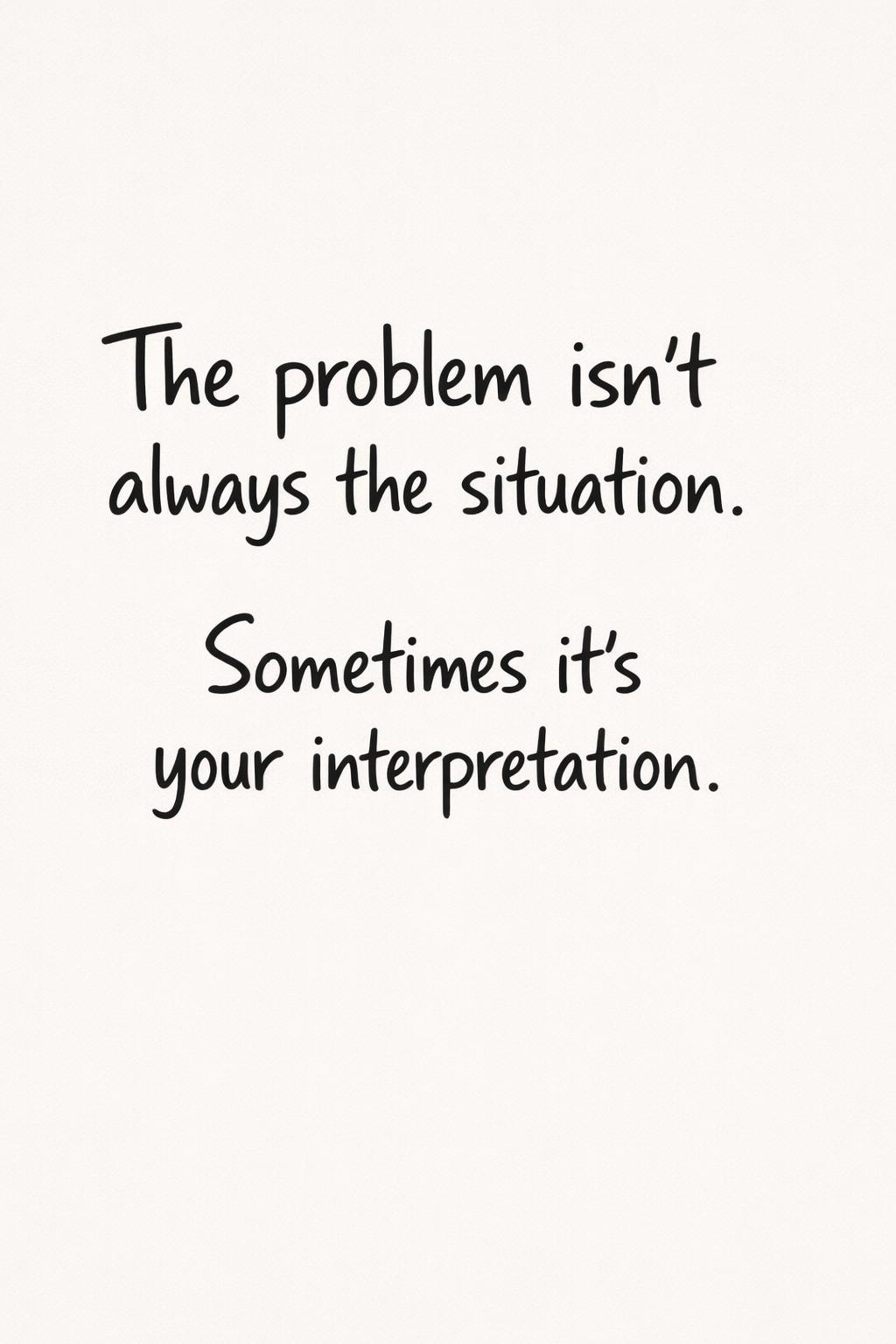
What if the situation isn’t the real problem — your interpretation is?
Two people can experience the exact same event and walk away with completely different stories. One sees rejection, the other sees redirection. One sees failure, the other sees feedback. The facts may be the same, but the meaning you assign to them changes everything.
Your interpretation shapes your emotions, your confidence, and your next move. That doesn’t mean every situation is easy — but it does mean you have more control than you think. Shift the lens, and you might just change the outcome.
10. You’re not overwhelmed. You’re overthinking.
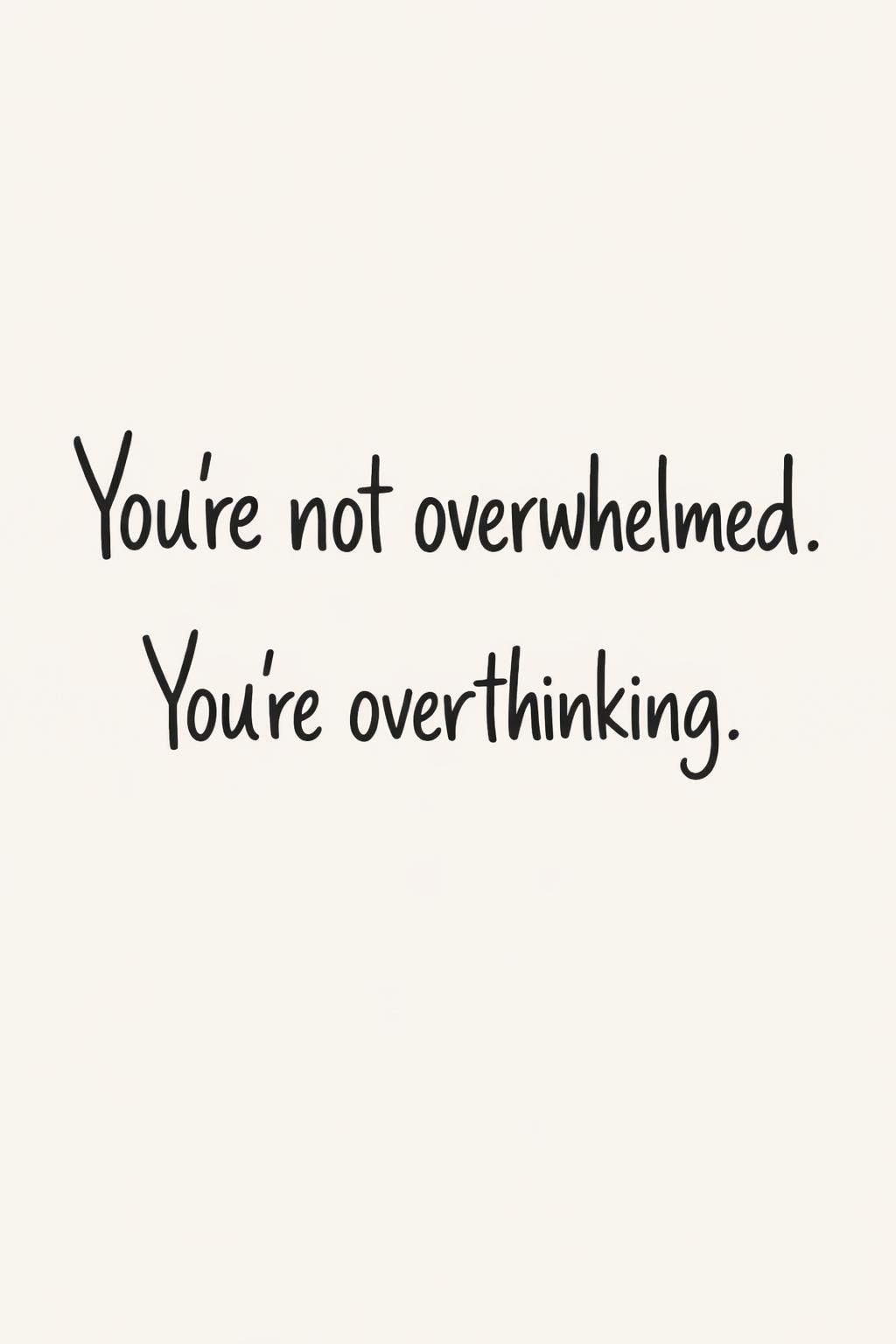
Are you truly overwhelmed — or just stuck in your own head?
Sometimes it’s not the workload that exhausts you. It’s the constant mental replay. The “what ifs,” the second‑guessing, the need to figure everything out at once. You’re trying to solve tomorrow’s problems with today’s energy — and that’s what feels heavy.
Strip it back. What actually needs to be done right now? Not everything. Just the next step. Clarity comes from action, not overanalysis. Quiet the noise, focus small, and watch how manageable things start to feel.
11. Not everything requires a reaction.
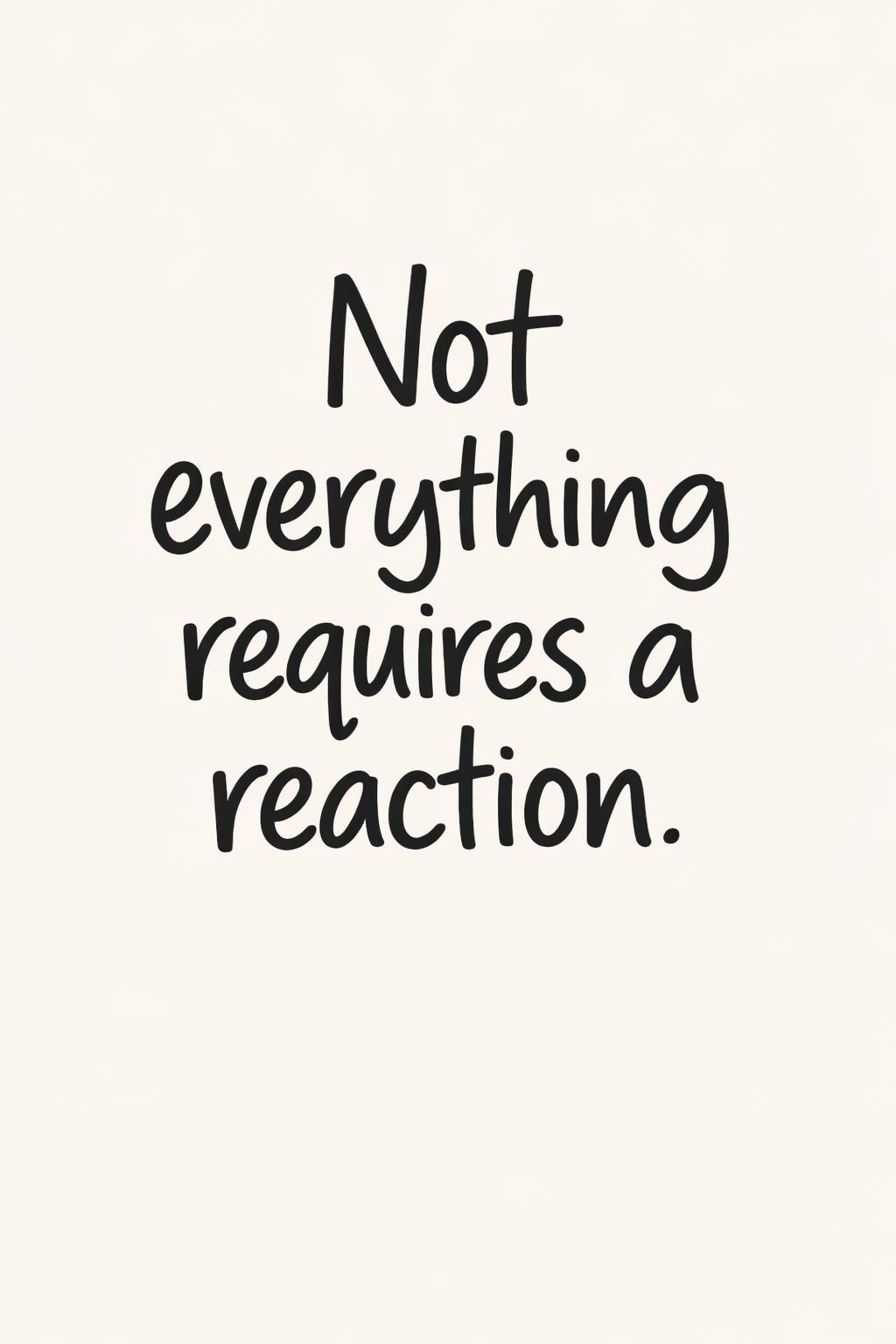
Does this really need your reaction — or just your awareness?
Not every comment deserves a reply. Not every opinion deserves a defense. Not every situation deserves your energy. We’ve been conditioned to respond instantly, to prove a point, to correct, to engage. But constant reaction is exhausting — and often unnecessary.
Silence can be strength. Composure can be power. Sometimes the most mature move is choosing not to participate. Protect your peace. Your energy is valuable — spend it where it actually makes a difference.
12. Discipline is choosing what you want most over what you want now.
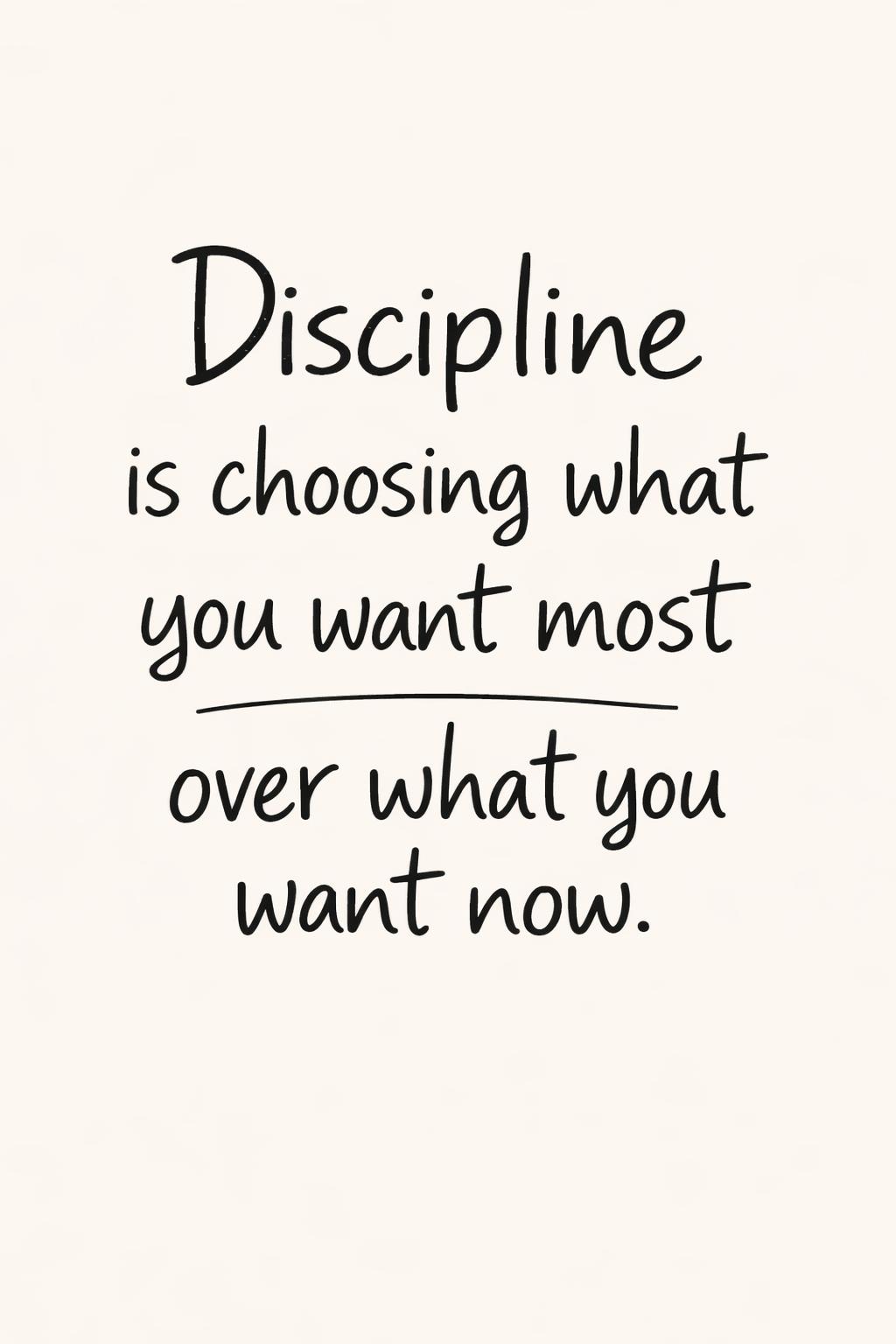
How often do you trade the future you want for the comfort you want right now?
Discipline is not punishment or perfection — it is alignment. Every choice either moves you closer to your goals or quietly pulls you away from them. The people who build meaningful lives are not always the most gifted; they are the ones who stay consistent when motivation disappears. Short-term comfort is tempting, but long-term fulfillment is built through small, repeated decisions that compound over time.
Your life reflects the standards you are willing to keep. When you start choosing what matters most over what feels easiest in the moment, you shift from reacting to life to actively shaping it. Discipline is not restriction — it is self-respect expressed through action.
13. You're allowed to outgrow people, places, and versions of yourself.
Have you ever felt guilty for changing, even when you knew it was necessary for your growth?
Outgrowing people, places, and past versions of yourself is a natural part of becoming who you are meant to be. As you evolve, your mindset, priorities, and standards shift — and not everything from your past is meant to evolve with you. Staying attached to what no longer aligns can quietly keep you stuck in a chapter you were meant to learn from, not live in forever. Growth is not disloyalty; it is self-awareness in action.
You are allowed to change direction, raise your standards, and step into a new version of yourself. Growth is not about losing who you are — it is about finally becoming who you were always capable of being.
14. The fear you feel is often a sign you're growing.
What if the fear you’re feeling is actually a sign that your life is expanding beyond its current limits?
Growth is rarely comfortable. Fear shows up when you leave familiar routines, challenge old beliefs, or move toward something that demands more from you. It doesn’t always mean you’re wrong — sometimes it means you’re stepping into a new level of confidence, resilience, and possibility. Waiting to feel ready can keep you stuck longer than failure ever will, because growth begins the moment you take action despite uncertainty.
Those who transform their lives are not the ones who avoid fear, but the ones who move through it anyway. Fear can either confine you or evolve you. The discomfort is temporary — what it builds in you can last a lifetime.
15. Stop waiting to feel ready. Start and let readiness catch up.
What is costing you more right now — the fear of starting, or the time you keep losing by waiting to feel ready?
Readiness is not something you arrive at; it is something you build through action. Waiting for perfect timing, confidence, or clarity often becomes disguised hesitation. Most people never feel fully ready before they begin. They start uncertain, adjust along the way, and develop capability through experience. Momentum comes from movement, not preparation.
Starting before you feel ready is not recklessness; it is how progress begins. Each step forward teaches what planning cannot. Confidence is not a prerequisite for action — it is the result of it. When you stop postponing life for a version of readiness that never comes, you begin growing in real time.
16. One hard conversation can save you months of silent resentment.
What if the most difficult conversation you avoid is also the one that could change everything?
We often choose silence because it feels safer in the moment. Yet that silence has a cost. It builds distance, not peace. It turns small misunderstandings into long-term resentment. A single honest conversation, though uncomfortable, has the power to reset expectations, clear emotional clutter, and restore clarity where confusion has been quietly growing.
The real shift is in mindset: discomfort is not the enemy, avoidance is. Speaking up is not about confrontation, but about alignment. When you choose truth over silence, you stop carrying emotional weight that was never meant to be permanent.
17. It's not too late – It's just later than you expected.
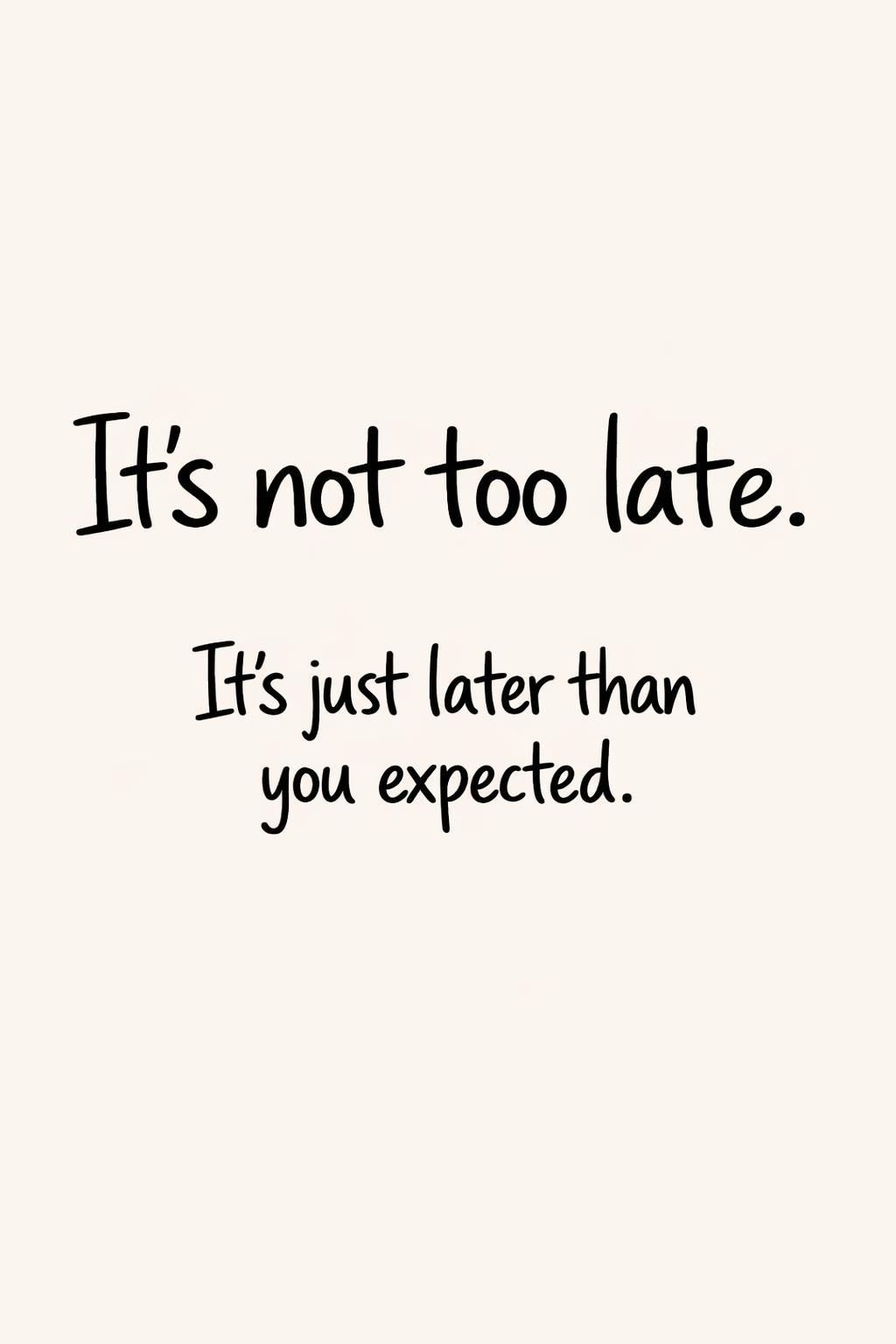
How often do you decide something is over simply because it didn’t happen when you expected it to?
We often measure our worth against rigid schedules that rarely account for the complexities of real growth. When a goal takes longer than expected, it is easy to mistake a delay for a final defeat. But timing is never a verdict on your potential.
Being later than expected does not reduce the value of what is still possible. Starting now means you are beginning with a level of experience and self-awareness you didn't possess years ago. What we mislabel as “lost time” is actually the period that shaped your character and prepared you for the success ahead. You are more prepared than you realize and entirely capable of building what you once thought was lost.
18. You survived 100 of your hardest days. Give yourself some credit.
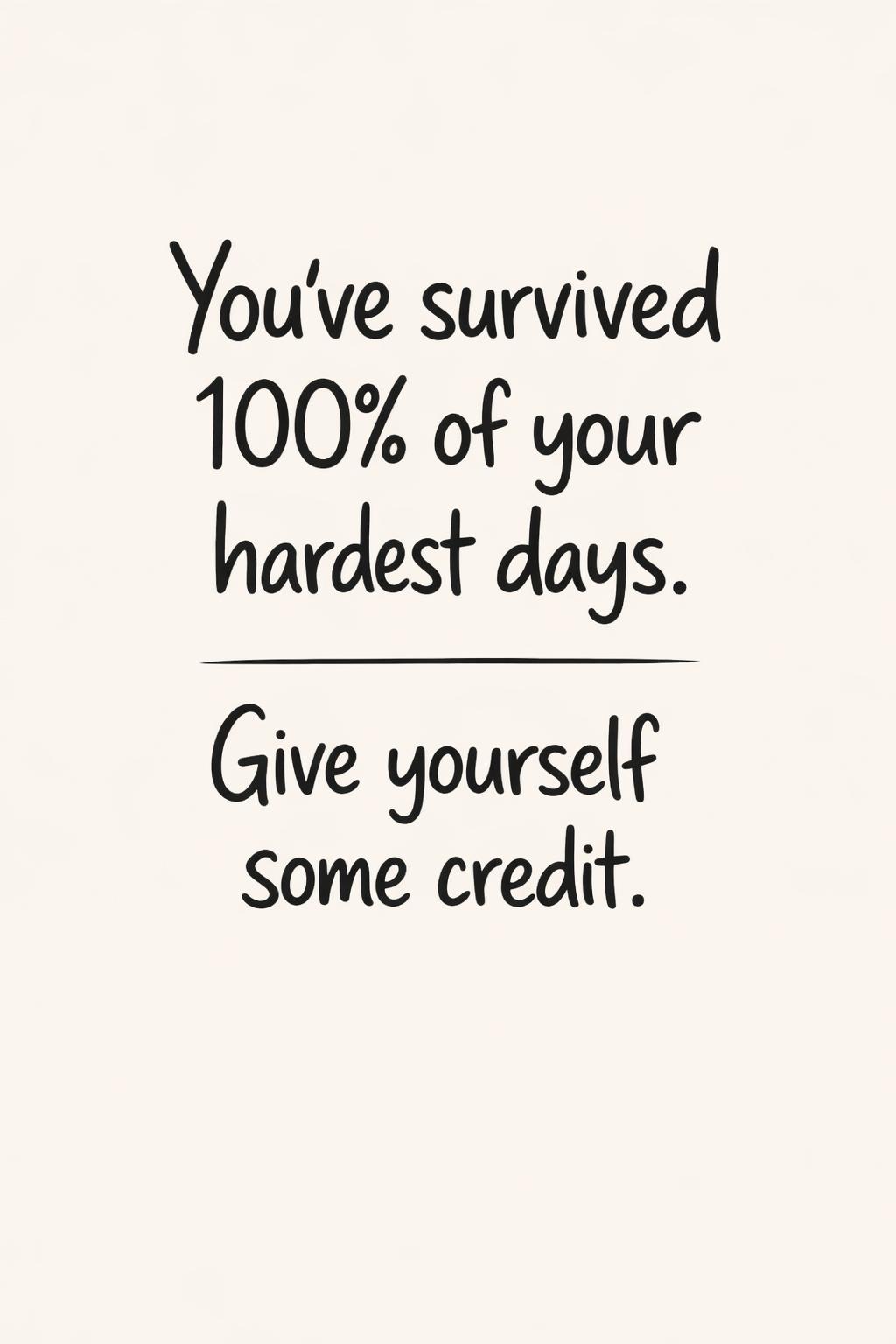
How often do you overlook your own strength because you are focused on what still feels difficult?
It’s easy to underestimate yourself in a hard season. You notice what remains unresolved, uncertain, and heavy, but forget what you’ve already survived: difficult conversations, losses, internal battles, and days you once thought you wouldn’t get through.
Survival is evidence of resilience. Strength is built quietly in moments you chose to continue despite discomfort. If you’ve made it through hard days before, it’s proof you are more capable than your circumstances suggest. Give yourself credit not only for where you want to go, but for what you’ve already endured.
Save the Reminders That Speak to You
These short positive messages are simple, but their impact can stay with you long after you’ve read them. Whether one message gave you comfort, clarity, or motivation, keep the words that resonate close and return to them whenever you need a reset.
Growth often starts with a single thought viewed differently. If these reminders helped you in any way, don’t forget to share this post on Pinterest so others can find the encouragement they may need too.