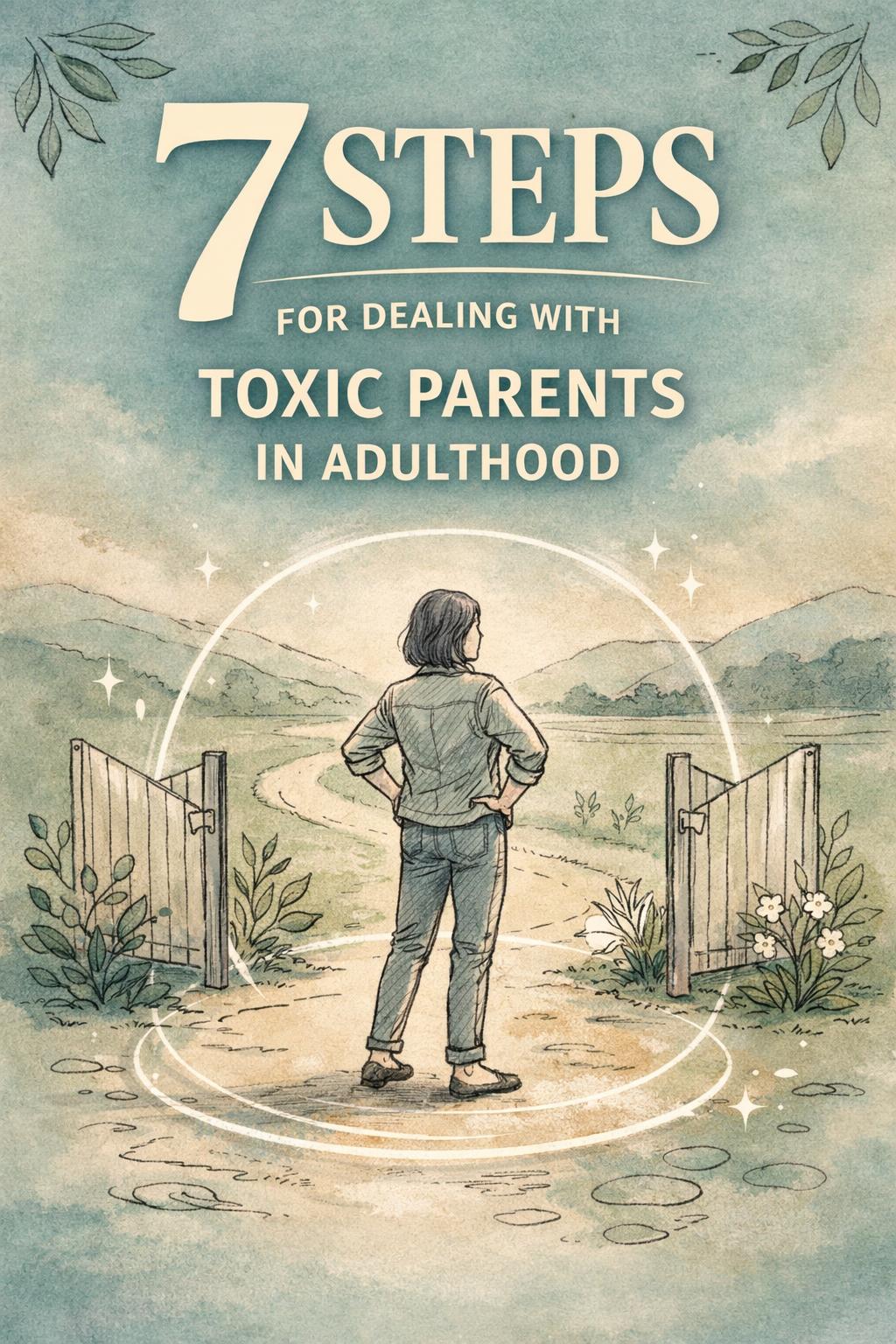

Growing up with parents who hurt you emotionally doesn't end when you become an adult. The pain can follow you into your relationships, your work, and how you feel about yourself. Many adults struggle with parents who still try to control them, criticize them constantly, or make them feel guilty for living their own lives.
Learning how to recognize toxic behavior and protect your mental health takes practice, but you can create healthier patterns even when your parents don't change. You deserve to feel safe and respected in your relationships, even with family members. The good news is that you have more power than you might think to set limits and take care of yourself.
This guide will walk you through practical steps like setting boundaries, managing difficult conversations, and building support outside your family. You'll also learn why therapy and self-care matter so much when you're dealing with toxic parents in adulthood.
1) Recognize specific toxic patterns (gaslighting, emotional blackmail, chronic criticism)
The first step in dealing with toxic parents is learning to spot the specific behaviors that harm you. These patterns often feel normal because you've experienced them your whole life. Once you can name what's happening, you can start to protect yourself.
Gaslighting happens when your parents deny your reality or make you question your own memories and feelings. They might insist something never happened even when you clearly remember it. You might hear phrases like “you're too sensitive” or “that's not what happened” when you try to discuss past events that hurt you.
Recognizing covert manipulation and gaslighting helps you understand these tools of emotional control. Your parents might twist conversations to make you feel confused about what's true. This leaves you doubting yourself and your experiences.
Emotional blackmail shows up when your parents use guilt or fear to control your choices. They might threaten to cut you off or claim you're hurting them if you don't do what they want. Comments like “after all I've done for you” or “you're going to give me a heart attack” are classic examples.
Guilt and loyalty often work together to keep you stuck in unhealthy patterns. Your parents may make you feel responsible for their happiness or well-being. They use your love for them as a weapon to get their way.
Chronic criticism means nothing you do is ever good enough in your parents' eyes. They constantly point out your flaws or compare you to others. Constant criticism and disrespect for boundaries can leave you feeling drained after every interaction.
This type of behavior damages your self-worth over time. You might find yourself walking on eggshells around them. Their disapproval becomes a heavy weight you carry even when they're not around.
Toxic behavior patterns include overprotectiveness, guilt-tripping, lack of boundaries, and neglect. Your parents might use different combinations of these behaviors. Pay attention to how you feel during and after spending time with them.
Shame-conditioning is another pattern where your parents make you feel bad about who you are as a person. They might mock your interests, career choices, or relationships. This goes beyond normal disagreement into attacks on your character and identity.
Notice if your parents refuse to take responsibility when they hurt you. They might turn things around to make themselves the victim. You end up apologizing even when they were the ones who caused harm.
These patterns don't always look dramatic or obvious. Sometimes they're subtle and happen slowly over many years. Trust your feelings when something doesn't sit right with you.
2) Set clear boundary: define one rule (e.g., no insults during calls) and enforce it
When dealing with toxic parents, setting boundaries is a skill you can learn and improve over time. You don't need to tackle everything at once.
Start by picking just one specific rule that matters most to your well-being. This might be “no yelling during phone conversations” or “no criticizing my career choices.” The key is making it concrete and easy to understand.
A boundary is simply a rule you create to define how you want to be treated. It protects your mental health and helps you maintain respect in the relationship.
Write down your boundary in clear, simple words. Vague statements like “be nicer to me” won't work because they're too open to interpretation. Instead, say something like “I won't continue conversations where I'm being called names.”
Once you've chosen your boundary, you need to communicate it directly to your parents. Pick a calm moment to explain your rule. You might say “From now on, if you insult me during our calls, I will end the conversation.”
Enforcing discipline consistently is what makes boundaries effective. When your parent crosses the line you've drawn, follow through immediately with the consequence you stated.
This might feel uncomfortable at first. You might worry about hurting their feelings or causing conflict.
Remember that you're not being mean or unreasonable. You're teaching people how to treat you with basic respect. If your parent insults you during a call, calmly say “I told you I won't accept insults. I'm hanging up now” and then actually hang up.
Consistency is everything when it comes to boundaries. If you enforce your rule sometimes but not others, your parents will learn they can push past it. Every single time the boundary is crossed, you must follow through.
Uncomfortable feelings help you reset your boundaries and restore your sense of self. Pay attention to how you feel during interactions with your parents. These emotions are giving you important information.
Don't expect your parents to like your new boundary right away. They might push back, get angry, or try to make you feel guilty. This doesn't mean you're doing something wrong.
Stick to your one rule for several weeks or months before adding new boundaries. This gives everyone time to adjust. It also builds your confidence in your ability to protect yourself.
Setting healthy boundaries allows you to say “no” without feeling guilty while respecting your own needs and values. You deserve to be treated with basic kindness, even by your parents.
3) Use scripted responses for triggers (brief, neutral phrases)
Having ready-made phrases can help you stay calm when your parents say things that normally upset you. You don't have to come up with the perfect response in the moment when emotions are high.
Scripts for setting boundaries give you a plan before difficult conversations happen. They work like a safety net for your emotions.
The grey rock method uses brief and neutral responses to make conversations less interesting to people who try to manipulate you. You keep your answers short and boring. This takes away the emotional energy that toxic people often feed on.
When your parent criticizes you, try saying “I hear you” or “That's your opinion.” These phrases don't agree or disagree. They just acknowledge what was said without opening the door to more conflict.
For manipulation attempts, use “I need to think about that” or “I'm not discussing this right now.” You're setting a limit without explaining yourself too much.
Keeping responses emotionally neutral means using a flat tone and simple words. Don't share details about your life that could be used against you later. Answer questions with basic facts only.
Write down your scripted phrases and practice them before seeing your parents. Say them out loud a few times so they feel natural. This preparation makes them easier to use when you're stressed.
You can also use “I need to go now” or “We can talk about this another time” to end conversations that become too much. These exit phrases protect your mental energy. They let you leave without seeming rude or starting a bigger fight.
4) Limit contact frequency with a set schedule (e.g., weekly 30‑minute calls)
Creating a specific schedule for talking with your parents helps you take back control of your time. Instead of accepting calls whenever they come, you decide when and how long you'll talk. This gives you predictability and reduces stress.
You might choose one 30-minute call per week or whatever works for your situation. The key is picking a time limit and sticking to it. When you set boundaries with toxic parents, you can care about your family while still protecting yourself.
Start by telling your parents about the new schedule in a clear way. You could say something like, “I'm going to call you every Sunday at 2 p.m. for about 30 minutes.” You don't need to explain all your reasons or apologize for the change.
If they call outside your scheduled time, let it go to voicemail. You can check later to make sure there's no real emergency. Then stick to your planned call time to discuss anything that came up.
Limiting contact when necessary is one of the practical strategies that helps protect your mental health. Your parents might push back at first or try to guilt you into more contact.
Having a set end time protects your energy too. When the 30 minutes are up, you can say, “I need to go now, but I'll talk to you next week.” This prevents conversations from draining you for hours.
Some people find it helpful to tell their parents to stop calling every day by offering an alternative schedule instead. This way you're not just saying no, you're giving them a specific time they can count on.
Write down your schedule and keep track of it. This helps you stay consistent even when you feel guilty or pressured to break your own rule. Consistency makes the boundary stronger over time.
You can adjust the schedule if needed, but do it because you want to, not because of pressure. Maybe you start with weekly calls and later decide biweekly works better for your wellbeing.
5) Prioritize self-care routines after interactions (walk, journaling, grounding)
Dealing with toxic parents often leaves you feeling drained and upset. Your emotions might feel all over the place after a phone call or visit. This is why self-care activities can help support your mental health and recovery.
Taking a walk after an interaction gives you physical distance and mental space. Moving your body helps release tension that builds up during stressful conversations. Even a short 10-minute walk around the block can help clear your mind.
Journaling lets you process your feelings in a safe space. Write down what happened and how it made you feel without judging yourself. Getting these thoughts out of your head and onto paper can help you see the situation more clearly.
Grounding methods serve as valuable tools when you feel overwhelmed or anxious. Try the 5-4-3-2-1 technique where you name five things you see, four you can touch, three you hear, two you smell, and one you taste. This brings your focus back to the present moment instead of replaying the interaction.
Deep breathing is another simple grounding practice. Breathe in slowly for four counts, hold for four, then breathe out for four. Repeat this several times until you feel calmer.
You might also try gentle self-care rituals that support mental health in realistic ways. This could mean making yourself a cup of tea, listening to music you enjoy, or calling a supportive friend. The key is choosing activities that actually help you feel better, not what you think you should do.
Creating a self-care routine takes practice and patience with yourself. Start small with one or two activities that feel manageable. You can add more as these become habits.
The goal is to give yourself time and space to recover emotionally. You deserve to feel calm and stable after difficult interactions with your parents.
6) Seek therapy specialized in family dynamics (find a trauma‑informed therapist)
Working with a professional who understands toxic family relationships can make a huge difference in your healing process. A therapist who specializes in family dynamics knows how these patterns develop and persist across generations.
Trauma-informed therapists understand how difficult family relationships affect your emotional and mental health. They won't push you to reconcile with your parents if that's not what's best for you. Instead, they focus on your needs and safety first.
Finding the right therapist takes some effort, but it's worth it. You want someone who treats parent-child abuse as a real problem, not something you should just get over. Some therapists may push reconciliation too quickly or tell you to “be the bigger person,” which can actually cause more harm.
Look for therapists who mention trauma-informed care or family estrangement in their profiles. Many therapist directories let you search by specialty, so you can filter for professionals who work with adult children of dysfunctional families. You can browse directories of therapists to find someone near you.
During your first session or consultation call, ask about their experience with toxic parent relationships. A good therapist will validate your experiences and help you set healthy boundaries. They should never minimize what you've been through or pressure you toward any particular outcome.
Family trauma affects everyone in the household differently, and a skilled therapist understands these dynamics. They can help you process painful emotions, develop coping strategies, and rebuild your sense of self. Finding a therapist who truly understands recovery gives you the support you need on your healing journey.
7) Build a support network of trusted friends or chosen family
When you grow up with toxic parents, you might not have learned what healthy relationships look like. Building a support network as an adult gives you a chance to experience the care and understanding you deserve.
You don't need a large group of people to benefit from social support. A few trusted friends who truly see and value you can make a real difference in your life.
Chosen family can decrease isolation and loneliness and provide support you may not get from your biological family. These are people you deliberately select to share your life with based on mutual respect and care.
Start by identifying people in your life who make you feel safe and accepted. This might include friends, coworkers, mentors, or members of groups you belong to. Pay attention to who listens without judgment and who respects your boundaries.
Consider joining support groups where you can connect with others who understand what you're going through. Therapy or support groups can help you meet people with similar experiences and learn from their journeys.
Online communities can also provide valuable connections. Many people find comfort in forums and social media groups dedicated to adult children of toxic parents.
Building a support network takes intention and effort, but the benefits are worth it. You'll need to be willing to open up and let others in, which can feel scary at first.
Nurture these relationships by staying in regular contact and being supportive in return. Good friendships grow stronger when both people invest time and care into the connection.
Remember that you deserve people in your life who celebrate your successes and support you through challenges. Your support network becomes a foundation for healing and growth as you move forward from a difficult past.
Understanding the Impact of Unhealthy Family Dynamics
Growing up with toxic parents affects how you see yourself, relate to others, and handle stress well into your adult years. These early experiences shape your nervous system and create patterns that can show up in your relationships, work life, and mental health.
Emotional and Psychological Effects
Dysfunctional family dynamics often follow you into adulthood because your nervous system learned specific ways to survive. You might struggle with trust issues, anxiety, or depression even when you're far from your childhood home.
Low self-esteem is common when you grow up hearing criticism or dealing with emotional manipulation. You may find yourself constantly seeking approval from others or feeling like you're never good enough. These feelings don't appear out of nowhere—they're direct results of how you were treated.
Your relationships often mirror what you learned growing up. If boundaries were ignored in your family, you might have trouble setting them now. You could stay in unhealthy friendships or romantic relationships because they feel familiar.
Many adults from toxic families experience trouble with emotional regulation. You might overreact to small problems or shut down completely when faced with conflict. These responses made sense when you were younger, but they can hold you back now.
Breaking Generational Patterns
Recognizing toxic family dynamics in adulthood is the first step toward change. You don't have to repeat the same patterns with your own children or in your current relationships.
Start by identifying specific behaviors from your childhood that you want to avoid. Write them down and notice when you catch yourself doing similar things. Awareness alone won't fix everything, but it gives you a chance to make different choices.
Therapy can help you understand how your past affects your present. A therapist can teach you new ways to handle emotions and build healthier relationships. You're not broken—you just learned survival skills that no longer serve you.
Key steps to break the cycle:
- Learn what healthy boundaries look like
- Practice expressing your needs clearly
- Challenge negative thoughts about yourself
- Build a support network outside your family
- Seek professional help when needed
You have the power to create a different legacy. The patterns stop when you decide they stop.
Establishing Personal Boundaries
Setting clear limits helps protect your mental health and creates space for healthier interactions. Learning to state your needs directly and manage the emotional pushback are essential skills for maintaining these boundaries.
Communicating Your Limits
Start by identifying what behaviors you will and won't accept. Write down specific situations that drain you or cross a line, like unannounced visits or criticism about your life choices.
Use clear, simple statements when setting boundaries with your parents. Say “I need you to call before stopping by” instead of “Maybe you should let me know sometimes.” Direct language leaves less room for confusion.
Pick a calm moment to have these conversations. Avoid bringing up boundaries during arguments or family gatherings when emotions run high.
Examples of boundary statements:
- “I won't discuss my finances with you”
- “I need to leave when voices are raised”
- “My parenting decisions aren't up for debate”
Keep your tone firm but respectful. You're not asking permission—you're stating what you need to feel safe and respected in the relationship.
Handling Guilt and Resistance
Your parents may react poorly when you first set limits. Expect resistance and emotional fallout as they adjust to this change in your relationship dynamic.
Common reactions include guilt trips, anger, silent treatment, or claims that you're being selfish. These responses don't mean your boundaries are wrong.
Remind yourself that feeling guilty doesn't mean you're doing something bad. The discomfort comes from changing old patterns, not from harming anyone.
When guilt appears:
- Acknowledge the feeling without acting on it
- Repeat your boundary calmly if challenged
- Lean on friends or a therapist for support
Stay consistent even when it feels hard. Going back on boundaries teaches others they just need to push harder next time. Protecting your peace and honoring your needs matters for your long-term wellbeing.
Final Thoughts About Dealing with Toxic Parents
Dealing with toxic parental behavior takes courage and patience. You're not being selfish by protecting your mental health.
Remember that you can't change your parents. You can only control how you respond to them and what boundaries you set. This is one of the hardest truths to accept, but it's also freeing once you understand it.
Healing doesn't happen overnight. You might have good days and hard days. That's normal and okay.
Some people find that setting boundaries with toxic parents brings up feelings of guilt or loyalty. These feelings are valid, but they don't mean you're doing something wrong. You can care about your family and still choose to protect yourself.
Key things to remember:
- Your feelings are valid
- You deserve respect and healthy relationships
- Professional help can make a big difference
- Progress isn't always linear
- Taking care of yourself isn't mean or wrong
Growing up with toxic parents affects you in ways that last into adulthood. You might struggle with self-doubt, anxiety, or trouble in relationships. These challenges are real, but they can get better with time and support.
Give yourself credit for every step you take. Whether that's setting one small boundary or going to therapy, you're moving forward.